Best migraine relief cap in 2026: how to choose
⚡ Key takeaways
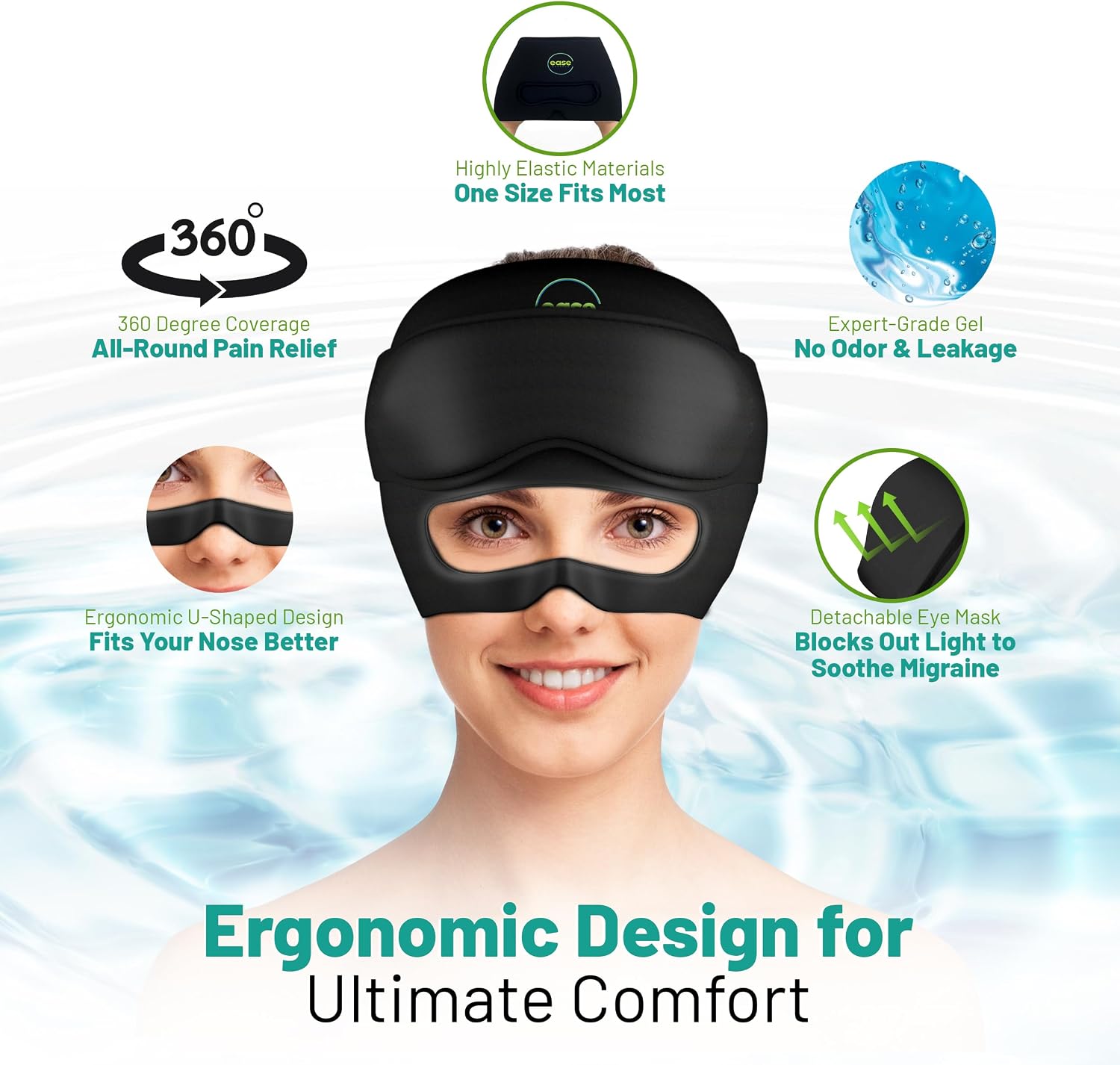
- The best migraine cap covers your entire head — forehead, temples, and the back — not just one patch at the front.
- It works hot AND cold. Cold is more common for acute attacks; heat helps muscle-tension headaches. You shouldn't need two products.
- A detachable, U-shaped eye mask matters. Light sensitivity amplifies migraine pain; blocking it out is part of the therapy.
- Look for expert-grade sealed gel — odorless, no leaks, and stays pliable when frozen so it conforms to your head.
- One-size stretchy fit means it actually stays on while you lie down. The Ease Essence cap checks all five of these criteria and is rated 4.3★ from 220 Amazon ratings.
Walk into any pharmacy and you'll find a shelf of cold packs, head wraps, and gel compresses all claiming to ease migraines. Walk onto Amazon and the options multiply further. So how do you separate a cap that will genuinely help from one that slides off your head five minutes in, smells like a freezer, and covers roughly four square inches of your forehead?
This guide gives you six honest, practical criteria — the things that actually make a difference during an attack — and shows you what to check for in each one.
Why a migraine cap at all?
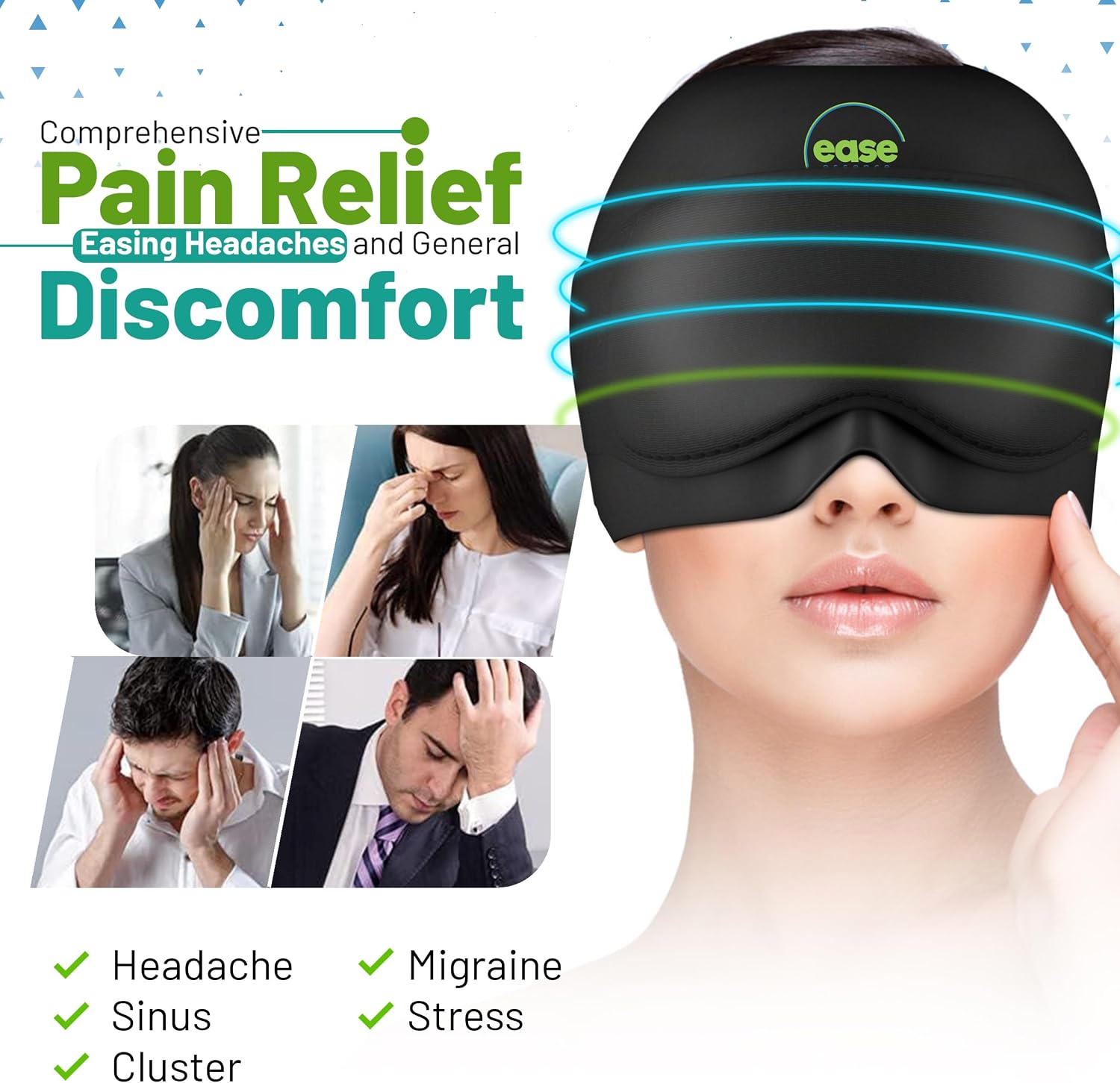
Cold (and sometimes heat) is one of the oldest, most accessible tools for managing migraine pain. Major patient organizations including the American Migraine Foundation list cold compresses as a recognized, drug-free comfort measure. The problem with a bag of ice or a flat gel pack is execution: it doesn't stay on, it drips, it covers a tiny area, and you have to hold it with your hand when all you want to do is lie still in a dark room.
A properly designed migraine cap solves all of that — hands-free, full-head coverage, with optional light-blocking. But "properly designed" is doing a lot of work in that sentence. Here's what it actually means.
6 things to look for when choosing a migraine cap
1. 360° full-head coverage
What to check: Does the cap wrap all the way around — forehead, temples, and the back of the head — or does it only cover the front third?
Migraine pain doesn't stay politely in one spot. It radiates across the forehead, pulses through the temples, and frequently extends to the back of the head and neck. A cap that only covers the front delivers partial therapy at best. Look for designs that describe wrap-around or 360-degree coverage, and check product photos to confirm the gel panel reaches the back.
2. Hot AND cold — not cold only
What to check: Can the cap be used both frozen (from the freezer) and warmed (in the microwave)?
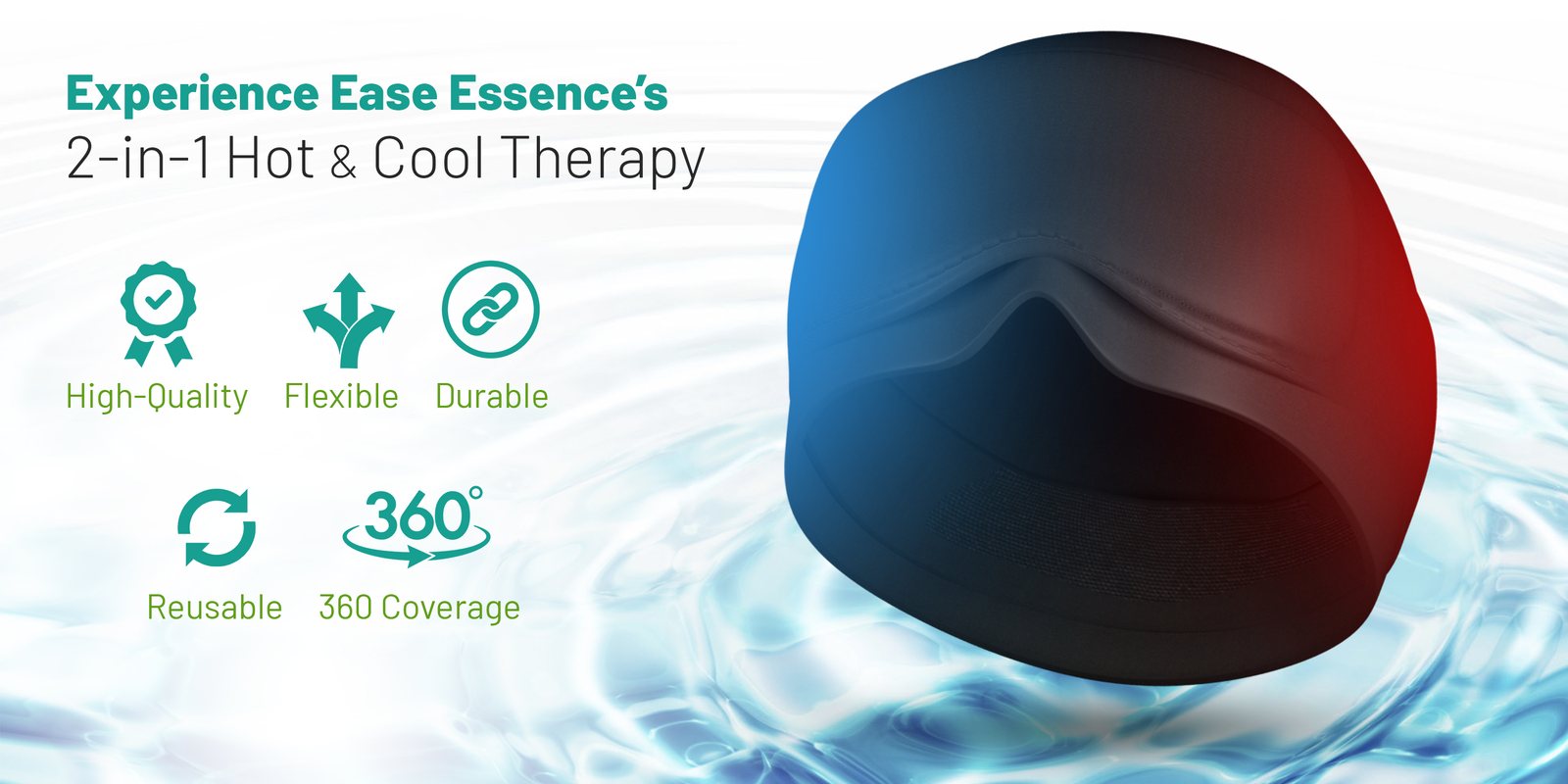
Cold is the more common choice during an acute migraine attack — it constricts dilated blood vessels and dulls nerve signaling. But heat relieves muscle tension and neck stiffness that can accompany or trigger headaches. Many people find they want cold for the attack itself and heat for the aftermath. A cap that only works cold limits you to one tool; a dual-mode cap gives you both. Check the product instructions to confirm actual microwave or warm-water compatibility, not just "warm compress" marketing language.
3. A detachable, ergonomic (U-shaped) eye mask
What to check: Is there an eye mask, is it removable, and does it have a U-shaped cutout for the nose so it sits flat on your face?
Photophobia — sensitivity to light — affects the majority of people during a migraine and is one of the most reliable ways to deepen the misery of an attack. A good migraine cap addresses this directly with a gel eye mask that blocks light at the same time it cools. Detachability matters because some people don't need the mask, and because you may want to use the mask and cap independently. The U-shaped nose cutout is a detail that separates functional from irritating: a flat mask either gaps at the nose (letting light in) or presses awkwardly on it.
4. Expert-grade sealed gel — odorless, flexible, no leaks
What to check: What is the gel made of? Does it have a smell? Does it stay soft and pliable when frozen, or does it freeze into a rigid brick?
The gel inside a migraine cap is where quality really separates products. A low-grade gel can freeze solid and lose the ability to conform to the contours of your head — delivering uneven contact and uncomfortable pressure. Some gels also develop a noticeable chemical odor when frozen, which is the last thing you want during a nausea-accompanied migraine. Expert-grade sealed gel stays flexible at freezer temperatures, conforms to your head, retains cold or heat efficiently, and remains odorless throughout its life. Sealed construction also means no leaks — no surprise puddles after lying down.
5. One-size stretchy fit
What to check: Is the cap adjustable or is it relying on stretchable, form-fitting fabric that accommodates most adult head sizes?
A cap that doesn't stay put is functionally useless when you're lying on your side in a dark room. Look for a stretchy, hat-like construction that hugs the head without pinching. One-size designs using high-elasticity fabric are generally more practical than straps-and-buckles adjustments, which add bulk and create pressure points. The goal is to put it on and forget it's there — focusing only on the relief, not the fit.
6. Reusable and easy to care for
What to check: How many uses does the cap support? Is it sealed against drips and odor-buildup? Is cleaning straightforward?
A good migraine cap is an investment, not a consumable. It should be designed for repeated use across many attacks — freezable and microwaveable multiple times without the gel degrading. Sealed construction keeps moisture inside the gel panels (no drips on bedding), and a surface that can be wiped clean is a meaningful practical advantage over fabric that absorbs sweat and develops odors over time.
Criteria comparison: what to look for vs. Ease Essence
| Criterion | What to look for | Ease Essence cap |
|---|---|---|
| Coverage | 360° — forehead, temples, and back of head | Full 360° wrap-around gel coverage |
| Temperature modes | Both freeze (cold) and microwave (heat) | Hot & cold — freezer and microwave compatible |
| Eye mask | Detachable, U-shaped for nose fit, light-blocking gel | Detachable gel eye mask with ergonomic U-shaped cutout |
| Gel quality | Sealed, odorless, stays pliable when frozen | Expert-grade sealed gel — odorless, flexible frozen, no leaks |
| Fit | Stretchy, one-size, stays on lying down | Stretchy one-size design, hat-style, hands-free |
| Care & reuse | Multi-use, wipeable, no drip | Reusable, sealed construction, easy to wipe clean |
Our pick: the Ease Essence Migraine Relief Cap
Based on the six criteria above, the Ease Essence Migraine Relief Cap is our recommendation. It was designed specifically to address the practical gaps that makeshift solutions — and many basic gel packs — leave open.
The cap delivers 360° full-head coverage through a stretchy, hat-style design that wraps from forehead to the back of the skull, keeping gel contact across the entire zone where migraine pain tends to spread. It works both hot and cold: freeze it for cold therapy during an acute attack, or warm it in the microwave for heat therapy on tension headaches or recovery.
The detachable gel eye mask is a standout feature. It attaches to the cap when you need full-face light-blocking, and removes cleanly when you don't — or when you want to use just the mask while sleeping. The U-shaped nose cutout means it actually sits flat and seals against light rather than gapping.
The expert-grade sealed gel stays pliable when frozen (no rigid brick pressing against your head), retains temperature effectively, and is odorless — an important detail for anyone whose migraines come with nausea. The sealed construction means no drips on your pillow.
The cap fits one size, using stretchy fabric that accommodates most adult head sizes without straps or adjustments. It stays on while you lie down.
Real-world results back this up: the Ease Essence cap is rated 4.3 stars from 220 Amazon ratings — a strong signal of consistent satisfaction across a large number of buyers.
How to use your migraine cap
Getting the most out of a gel migraine cap comes down to preparation and timing:
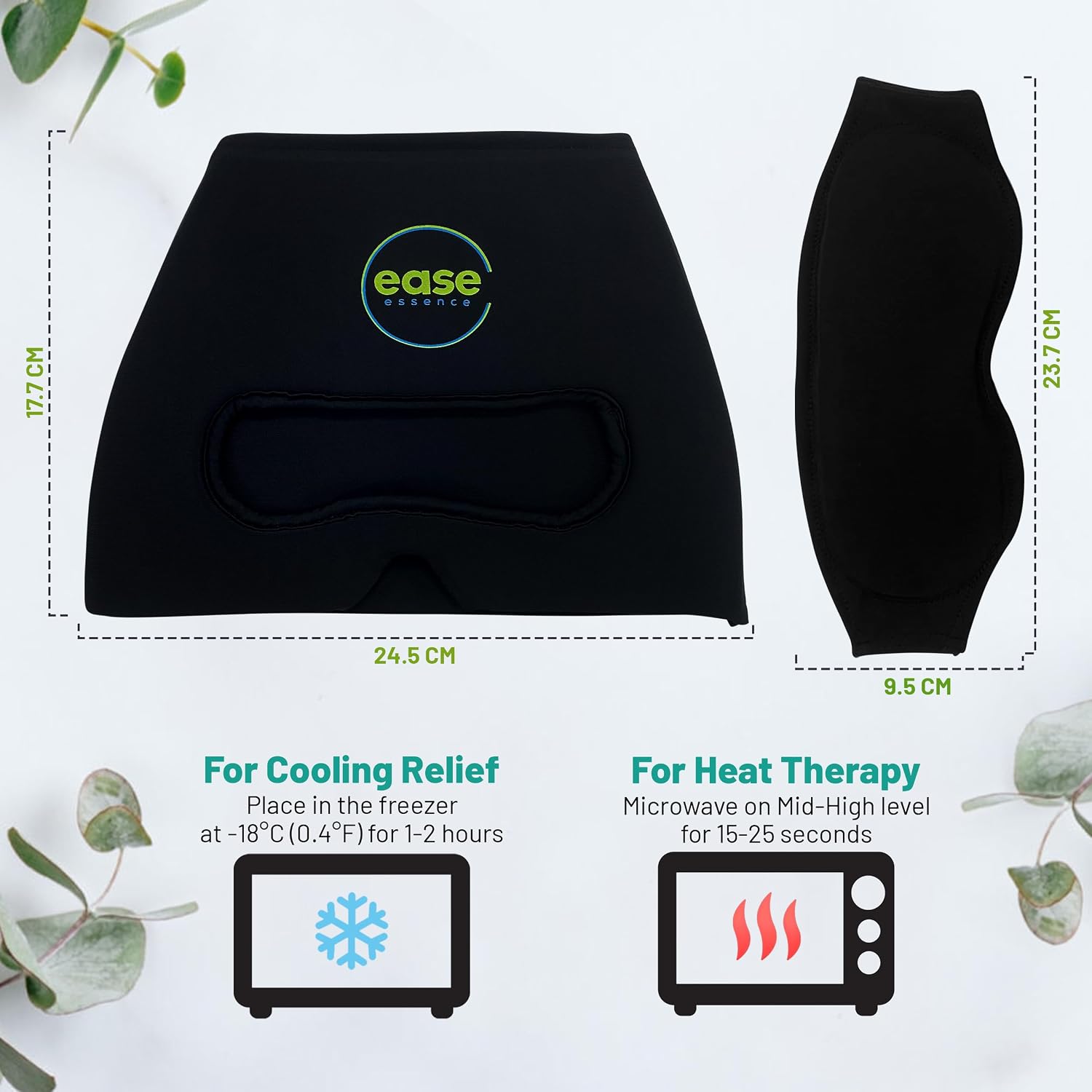
- For cold therapy: Place the cap (and eye mask if using) in the freezer for at least 1–2 hours before you expect to need it. The target is around −18°C (0°F). Keep a fabric layer between the gel and your skin, and use for about 15–20 minutes at a time. Apply at the first sign of an attack rather than waiting until the pain peaks.
- For heat therapy: Warm the cap or eye mask in the microwave in short 15–25 second intervals, checking the temperature after each burst. It should feel comfortably warm — never hot enough to cause discomfort. Heat works well for neck tension, post-attack muscle soreness, or headaches that respond better to warmth.
- Storage: Keep the cap in the freezer between uses so it's always ready. The sealed gel won't degrade in the freezer over time.
An honest note: results vary
Cold therapy works well for many migraine sufferers, but not everyone responds the same way. Some people find heat more effective — particularly for headaches tied to neck tension or those that don't respond to cold. A small number of people find temperature therapy doesn't significantly affect their migraines either way.
That's why it matters to choose a cap that does both. If cold doesn't give you the relief you're hoping for, try heat before concluding the cap isn't for you. For a deeper look at when each works and why, see our full comparison: Hot vs. cold therapy for migraines: which works when?
A migraine cap is a drug-free comfort tool — an effective one for many people, but a complement to medical care, not a replacement for it. If your headaches are frequent, severe, or changing in character, please talk to a healthcare professional.

Rated 4.3★ by 220 buyers on Amazon
360° hot & cold relief, detachable eye mask, sealed odorless gel — one cap, one size, hands-free.
Frequently asked questions
What should I look for in a migraine cap?
The six most important criteria are: 360° full-head coverage (forehead, temples, and back of head); both hot and cold modes; a detachable, U-shaped eye mask for light-blocking; sealed, odorless gel that stays pliable when frozen; a stretchy one-size design that stays on while lying down; and easy, reusable care with no drips or leaks.
Are migraine caps worth it?
For many people who already find cold or heat helpful for migraines, yes. A purpose-built cap delivers hands-free 360° coverage that a bag of ice or flat gel pack can't match, and combines temperature therapy with light-blocking — two of the most commonly recommended drug-free migraine comfort measures. Results vary by person, and a cap complements — rather than replaces — guidance from your doctor.
Hot or cold — which is better for migraines?
It depends on the person and sometimes the type of headache. Cold is more commonly used during an acute migraine attack because it constricts dilated blood vessels and dulls nerve signaling. Heat is often more effective for tension headaches and neck-related pain. The best approach is to try both and notice what your body responds to. See our full guide: Hot vs. cold therapy for migraines: which works when?
Medical disclaimer: This article is for general education only and is not medical advice. Ease Essence is a drug-free wellness product, not a medical device, and is not intended to diagnose, treat, cure or prevent any disease. If your headaches are frequent, severe, sudden or unusual, please consult a qualified healthcare professional.