How to stop a migraine fast without pills: 9 methods
⚡ Key takeaways
- Act at the very first sign. Every drug-free method works better early — the moment you feel the warning signs, start.
- Cold + darkness is the strongest opening play. Together they address vasoconstriction, light sensitivity, and pain simultaneously.
- Hydrate immediately. Dehydration is one of the most common and overlooked migraine triggers — water with electrolytes, not just plain water.
- Slow your exhale. Extended exhale breathing downshifts the nervous system and may help reduce the stress-triggered component of an attack.
- One product can cover four methods at once. A 360° cap with a detachable eye mask handles cold, darkness, gentle compression, and optional heat — without reaching for a pill.
A migraine can feel like it arrives out of nowhere and takes control of your entire day. But most attacks have a brief window — especially in the prodrome or early headache phase — where the right moves can significantly reduce severity and duration. This guide walks through nine evidence-aligned, drug-free methods you can use to stop a migraine fast, ranked roughly by how quickly they help when applied early.
These are practical, educational strategies, not a substitute for medical advice. If you have frequent or severe migraines, please work with a healthcare provider. That said, many of these methods are recommended by organizations like the American Migraine Foundation as safe, accessible first-line options for managing an acute attack.
1. Apply cold to your head — at the very first sign
Cold is the single most consistently reported drug-free intervention for acute migraine pain, and timing is everything. Applying cold at the first hint of an attack — aura, a hot or tight feeling at the temples, the early dull throb — can interrupt some of the vascular and inflammatory processes before they fully escalate.
Cold works through three mechanisms: it constricts dilated blood vessels around the head, slows pain-signal conduction in nearby nerves, and provides a numbing, competing sensation that partially masks the pain. A wrap-around cold cap that contacts your forehead, temples, and the back of your head simultaneously delivers far broader coverage than a small flat ice pack that you have to hold in place. If you want to go deeper on the science, see our guide on cold therapy for migraines.
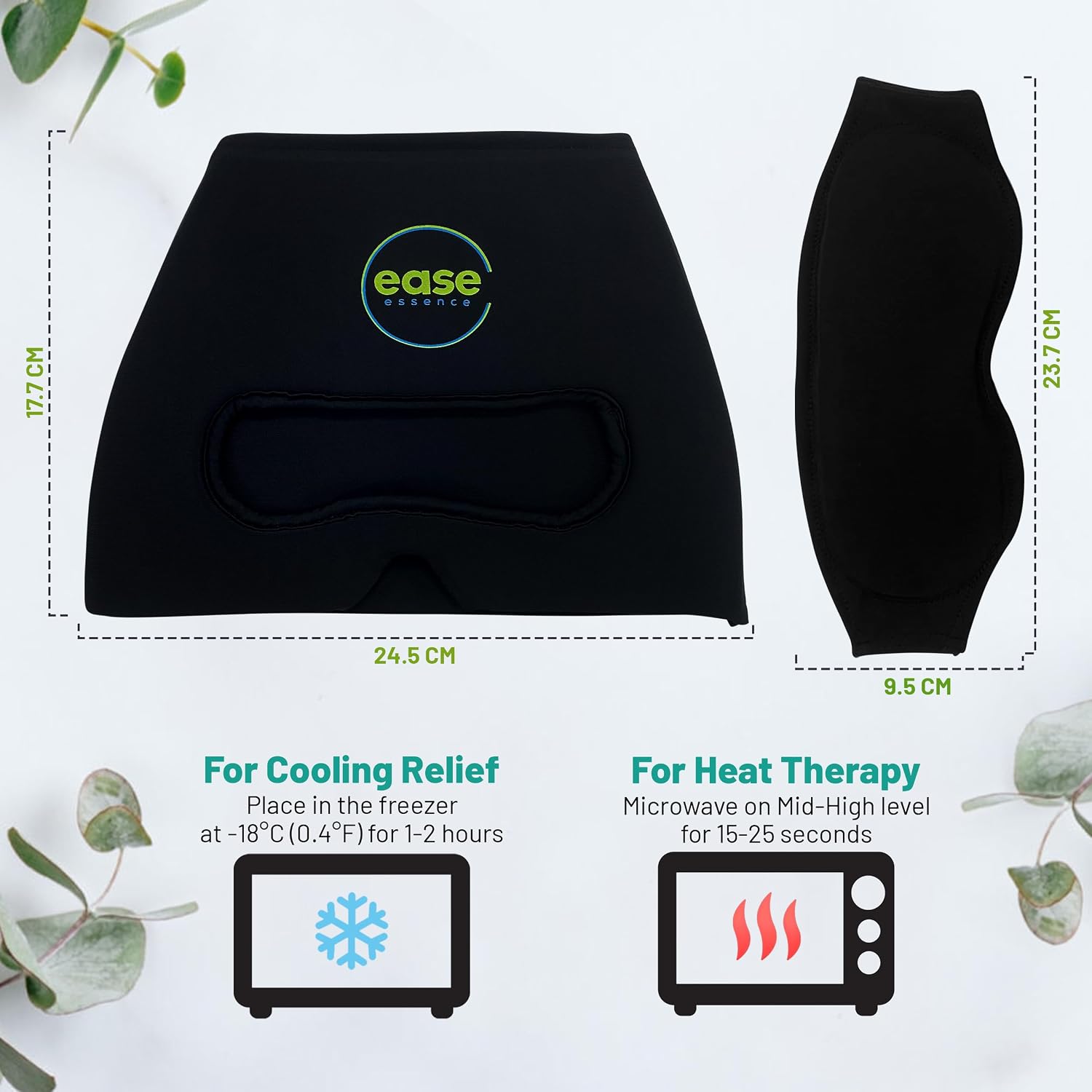
How to use it: Freeze the cap for at least 2 hours before you need it. At the first sign of an attack, pull it on and lie down. Aim for 15–20 minutes per session with fabric between the gel and your skin. Repeat after a short break if needed.
2. Retreat to a dark, quiet room
Photophobia (sensitivity to light) and phonophobia (sensitivity to sound) are hallmarks of migraine for a large majority of sufferers. Light and noise actively amplify the pain signal during an attack, turning a manageable ache into an overwhelming one. Removing those inputs isn't just comfort — it may genuinely reduce how severe the attack becomes.
Close the blinds, power off screens, and put your phone on silent. A well-fitted eye mask significantly boosts the darkness — not only blocking light but providing a light layer of soothing pressure over the eyes. The combination of cold on the head and a dark eye mask addresses two of the most common migraine amplifiers in a single step.
How to use it: Go dark as soon as you notice an attack starting. Don't wait to finish what you're doing — even a few minutes of continued screen time can accelerate the attack.
3. Hydrate and replenish electrolytes
Dehydration is one of the most common and overlooked migraine triggers. Even mild dehydration — as little as 1–2% of body weight in fluid loss — can be enough to trigger an attack in susceptible individuals, and it makes an already-underway migraine harder to resolve.
Plain water helps, but during a migraine attack your body may benefit more from a light electrolyte solution. Sodium, magnesium, and potassium all play roles in nerve function and fluid balance. Sip slowly and steadily rather than gulping, especially if nausea is present.
How to use it: Keep an electrolyte drink mix or coconut water in your migraine kit. As soon as an attack begins — or if you notice you've been running behind on fluids — start sipping. Continue throughout the rest period.
4. Use caffeine strategically
Small amounts of caffeine, taken early in a migraine, may help for some people. Caffeine causes mild vasoconstriction and is even included in some over-the-counter headache formulations for this reason. If you don't consume caffeine regularly, a small coffee or tea at the first sign of an attack is worth trying.
However, caffeine deserves caution. If you consume it daily, you may already be caffeine-tolerant, and skipping your usual dose can itself be a migraine trigger. Overuse or late-attack caffeine consumption can disrupt sleep and contribute to rebound headaches. Use it as a targeted, early tool — not a fallback throughout the day.
How to use it: If you rarely drink caffeine and catch the attack early, a small cup — around 100 mg — may help. Avoid caffeine entirely if the migraine is already in full swing or if you have a history of caffeine-rebound headaches.
5. Apply gentle pressure and compression
Many people instinctively press their fingers against their temples or forehead during a migraine — and there's a reason. Gentle, even pressure can temporarily reduce blood flow to the scalp, dampen the throbbing sensation, and provide a grounding counterpoint to the internal pain. Some research on pressure-point stimulation and temporal artery compression supports this anecdotally reported effect.
A stretchy, snug-fitting head wrap or cap delivers this compression across the whole scalp rather than just where your fingers happen to be. Even coverage means no single spot gets too much pressure, and the compression is maintained hands-free while you rest.
How to use it: Try pressing gently on both temples with your fingertips for a minute. If that helps, a well-fitted compression cap can maintain that gentle pressure throughout your rest without you holding anything in place.
6. Slow your breathing and downshift your nervous system
Stress is one of the most commonly cited migraine triggers, and the nervous system plays a direct role in how migraine attacks escalate. During an attack, your body's stress response can amplify pain perception. Deliberate slow breathing — particularly extending the exhale — activates the parasympathetic nervous system and signals the body to downregulate.
A simple technique: inhale for 4 counts, exhale slowly for 6–8 counts. Repeat for 5–10 minutes. This won't eliminate a migraine, but it may reduce the stress-amplified component and help you settle into rest more effectively. Progressive muscle relaxation — tensing and releasing muscle groups from feet upward — pairs well with this.
How to use it: Once you're lying down in your dark room with cold on your head, shift your focus to your breath. Extended exhale breathing costs nothing and has no side effects.
7. Try heat for neck and shoulder tension
Not every headache is a classic vascular migraine. If your attack feels more like tension radiating up from a tight neck and shoulders — common in people who spend long hours at a desk — applying gentle heat to the back of the neck may be more effective than cold.
Heat relaxes muscle tension, improves circulation to tight muscles, and can break the tension-headache component that sometimes accompanies or triggers a migraine. Many migraine cap products that use flexible gel packs can be heated (typically by microwaving) for exactly this use case — the same cap serves both purposes depending on your attack type.
How to use it: If the pain feels like it's starting in your neck and working up rather than starting deep in your head, try warming the cap or a heat pack and applying it to the back of your neck. See our guide on cold vs. heat for headaches for more on choosing the right therapy.
8. Sleep if you can
Sleep is often the most powerful reset button for a migraine attack. Many people find that even 60–90 minutes of genuine sleep in a dark, cool, quiet room can dramatically reduce or completely resolve an attack that might otherwise drag on for hours. This isn't just anecdotal: the relationship between sleep and migraine is bidirectional — poor sleep triggers migraines, and migraines disrupt sleep — but when sleep arrives during an attack, it often ends it.
This is one reason the other methods matter: cold, darkness, quiet, and slow breathing all reduce the stimulation and pain enough to allow sleep to happen. Think of methods 1–7 as creating the conditions for sleep, and sleep itself as the resolution.
How to use it: Don't fight sleep if it comes. Put your phone away, set a gentle alarm if you're worried about time, and let your body do what it's trying to do.
9. Know and avoid your triggers
The fastest way to stop a migraine is to not start one. Triggers are highly individual, but the most commonly reported ones include: disrupted or insufficient sleep, dehydration, skipped meals, caffeine fluctuation, bright or flickering lights, strong smells, alcohol (especially red wine), hormonal shifts, barometric pressure changes, and high stress.
Keeping a simple migraine log — just a few notes after each attack noting what was different in the prior 24 hours — can surface patterns quickly. Even a basic notes app works. Once you identify your top two or three triggers, reducing exposure to them gives you more control than any acute remedy.
How to use it: Log sleep, screen time, hydration, food, stress level, and weather for two or three months. Look for patterns. The American Migraine Foundation offers free trigger-tracking resources online.
When to see a doctor
Drug-free methods are valuable, but some headaches require urgent medical attention. Seek emergency care immediately if you experience:
- A sudden, severe headache that comes on in seconds — sometimes described as the "worst headache of your life" or a thunderclap headache
- Headache accompanied by fever, stiff neck, confusion, or sensitivity to light that is new and very severe (possible signs of meningitis)
- Headache following a head injury or fall
- New neurological symptoms: sudden vision loss, weakness on one side of the body, difficulty speaking, or facial drooping
- Headaches that are increasing in frequency or intensity over weeks without explanation
If your migraines are frequent (more than four days per month), disabling, or not responding to any strategies, please consult a neurologist or headache specialist. Preventive treatments and prescription options exist and can meaningfully change quality of life.
Build a migraine kit
Having everything ready before an attack means you can act the moment you need to rather than hunting through drawers with a pounding head. A basic migraine kit might include:
- A 360° cold cap (keep one in the freezer at all times)
- Water and an electrolyte mix (a few single-serve packets are enough)
- An eye mask for light blocking (or one that attaches to the cap)
- A quiet, dark space identified in advance — know where you're going
- Your migraine log — phone notes app, notepad, or a dedicated app
How the Ease Essence cap covers four methods at once
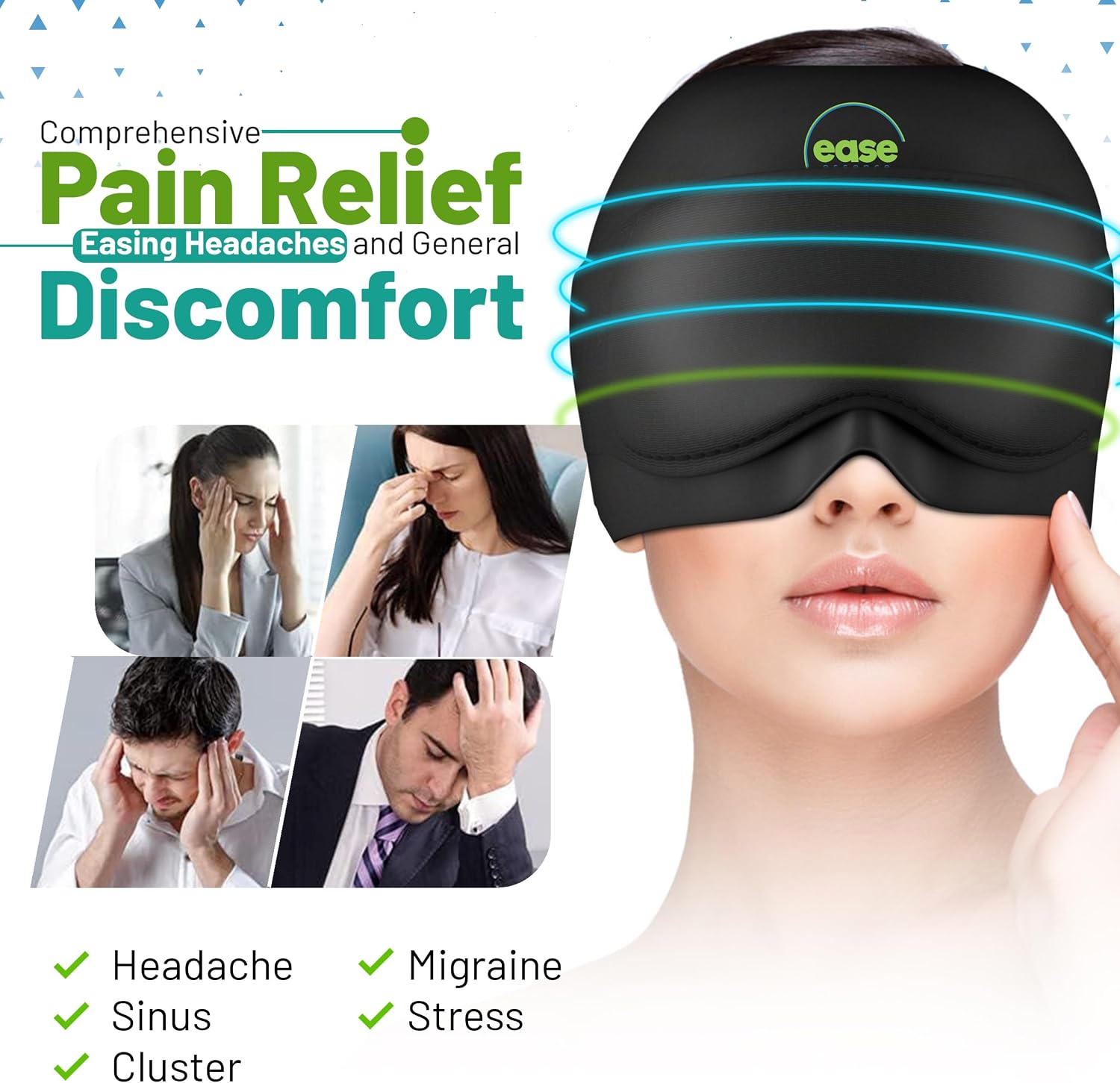
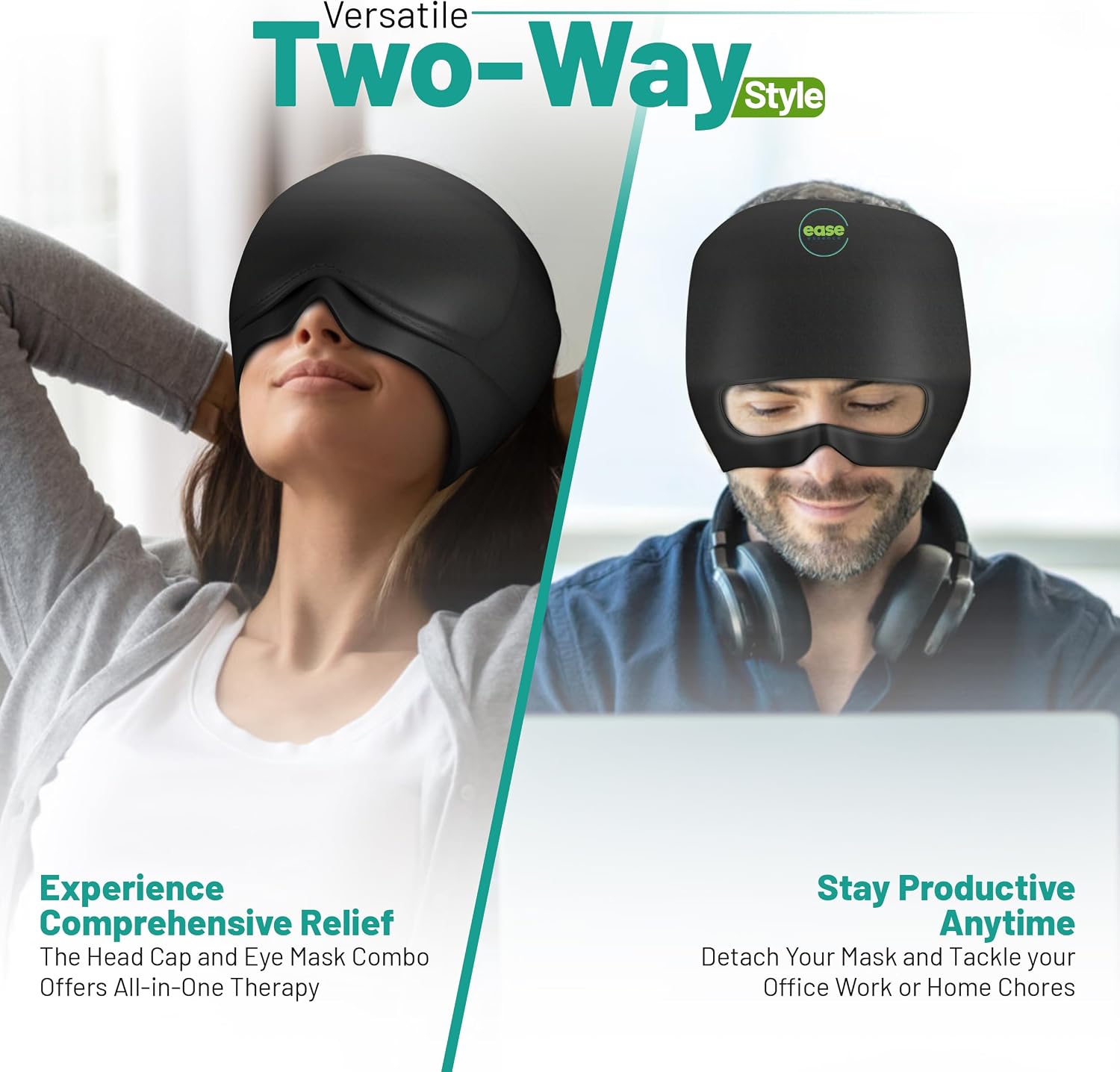
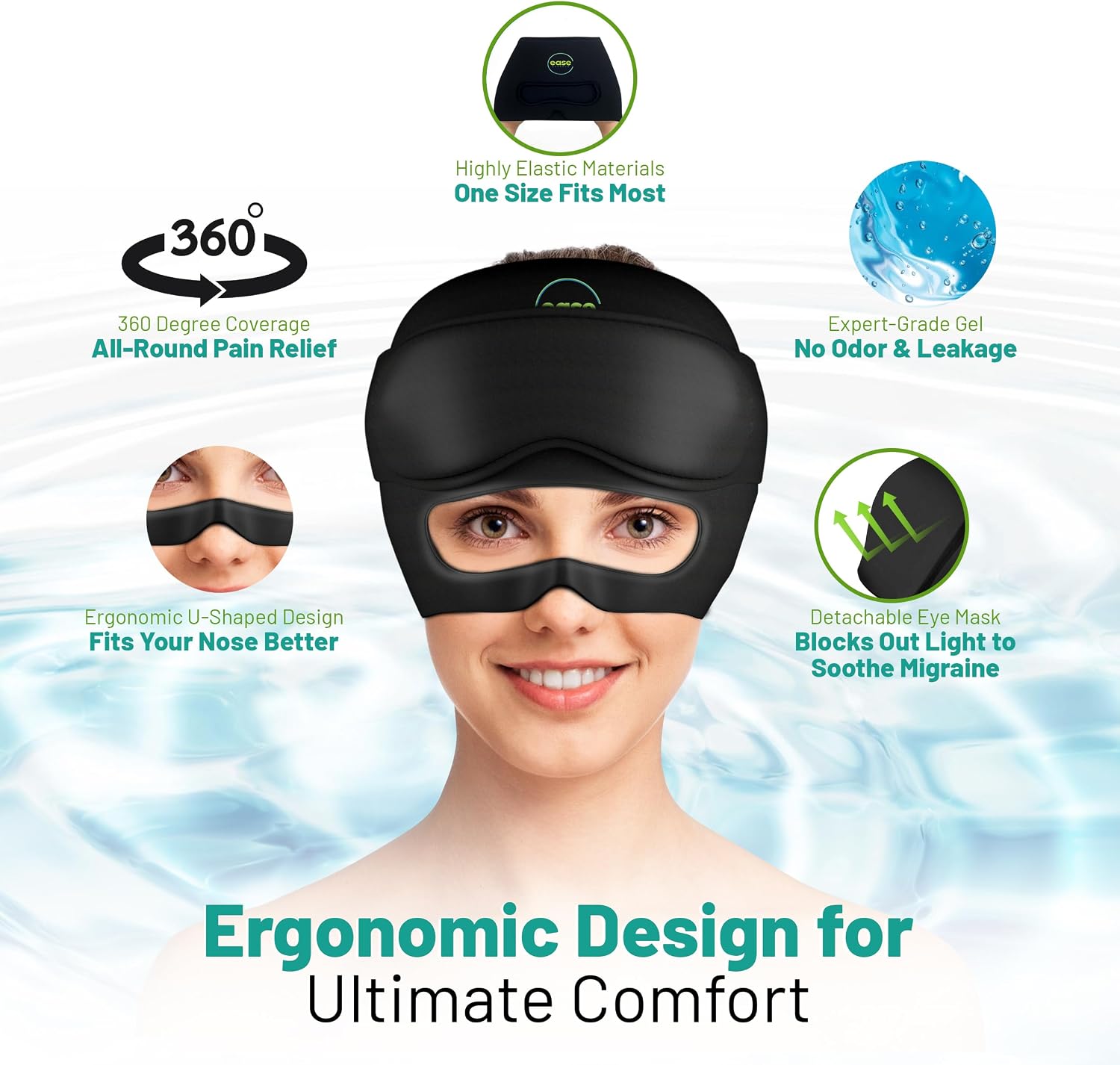
Methods 1, 2, 5, and 7 — cold therapy, darkness, gentle compression, and heat for neck tension — can all be addressed by a single product. The Ease Essence Migraine Relief Cap is a stretchy 360° headband that holds flexible gel inserts against your forehead, temples, and the back of your head for full-coverage cold (or heat). The detachable gel eye mask clips on to block light and adds gentle pressure over the eyes. It's hands-free, so you can actually lie still and rest. Use it cold out of the freezer, or microwave it for warmth — the same cap handles both attack types.
The goal is to remove as many barriers as possible between you and relief. The fewer steps you have to take when a migraine hits, the better your chances of catching it early enough to matter.

Cold + darkness + compression — in one cap
The Ease Essence 2-in-1 Relief Cap covers four of these nine methods hands-free, so you can rest the moment an attack starts.
Frequently asked questions
What is the fastest drug-free way to stop a migraine?
Applying cold to the head at the very first sign of an attack — combined with moving to a dark, quiet room — is consistently rated among the most effective drug-free interventions. Acting early, before the migraine peaks, makes the biggest difference. A 360-degree cold cap that wraps around the forehead, temples, and back of the head delivers broader coverage than a small ice pack.
Can you stop a migraine without medication?
Many people can significantly reduce the severity or duration of a migraine attack without medication by combining several drug-free strategies: cold therapy applied early, darkness and quiet, hydration with electrolytes, gentle head pressure, slow deep breathing, and rest. These methods work best together and are most effective when started at the first hint of an attack. They do not work for every person or every migraine, and if attacks are frequent or severe you should consult a doctor.
Does caffeine help or hurt a migraine?
A small amount of caffeine taken early in a migraine may help for some people — caffeine causes vasoconstriction and is even included in some over-the-counter migraine products. However, overusing caffeine or consuming it late in an attack can backfire and may worsen rebound headaches over time. If you are caffeine-sensitive or use it regularly, be cautious: tolerance and dependence can make caffeine withdrawal itself a migraine trigger.
Medical disclaimer: This article is for general education only and is not medical advice. Ease Essence is a drug-free wellness product, not a medical device, and is not intended to diagnose, treat, cure or prevent any disease. If your headaches are frequent, severe, sudden or unusual, please consult a qualified healthcare professional.