Hot vs. cold therapy for migraines: which works when?
⚡ Key takeaways
- Cold is generally best for throbbing migraines: it constricts dilated blood vessels and dampens pain-nerve conduction — targeting both core drivers of migraine pain.
- Heat works better for tension-type or muscle-tight headaches: vasodilation relaxes tight muscles in the neck, scalp, and shoulders.
- Many migraine sufferers prefer cold — the American Migraine Foundation lists cold compresses among its recommended drug-free comfort measures.
- Alternating hot and cold (contrast therapy) may help with tension headaches, but stick to cold for pounding, light-sensitive migraines.
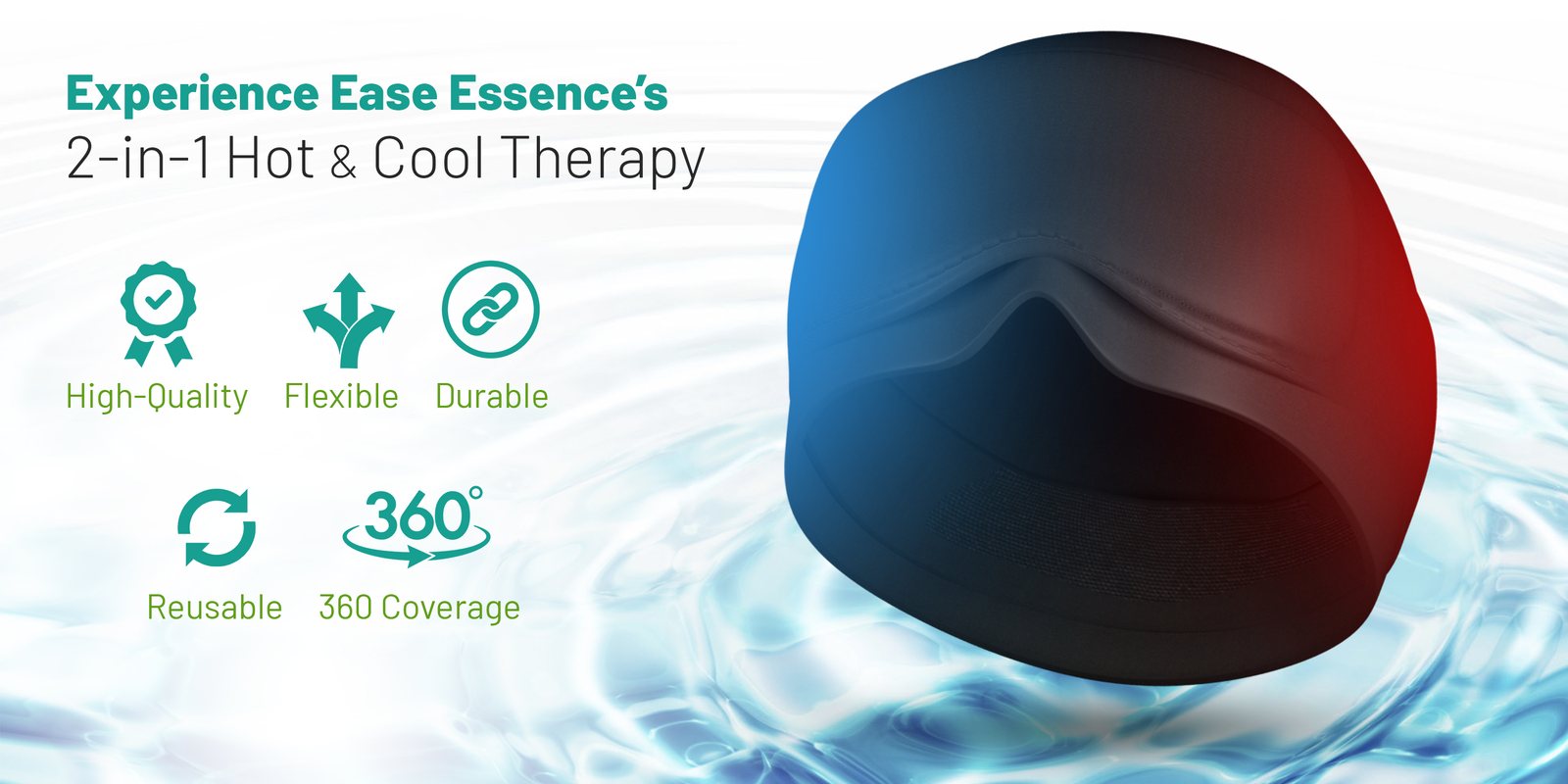
- The Ease Essence cap handles both — freeze it for cold therapy or microwave it for heat, with the same stretchy 360° fit either way.
You are mid-attack, your head is pounding, and someone hands you a choice: ice pack or warm compress? The honest answer is: it depends on what kind of headache you have. For some people in some situations, cold is transformative. For others, heat is what finally unlocks the tension. This guide walks through the physiology of each, gives you a clear decision framework, and explains when a single cap that does both is the smarter approach.
What heat does to a headache
Warmth causes blood vessels to dilate — a process called vasodilation. It also relaxes smooth muscle and soft tissue, which is why a hot shower eases a stiff back or a warm towel soothes tight shoulders. Applied to the head and neck, heat can:
- Loosen tight muscles at the back of the neck, the scalp, and the base of the skull — common sources of tension-type headache pain.
- Increase local circulation, which may help carry away built-up metabolic byproducts in fatigued muscles.
- Create a soothing, calming sensation that can ease stress-related headache discomfort.
The important caveat: for a classic migraine — the kind defined by throbbing, pulsing pain, nausea, and light sensitivity — heat may actually make things worse. Migraine pain is partly driven by dilated, inflamed blood vessels around the brain. Adding more heat and more vasodilation can amplify that pulsing rather than quiet it.
What cold does to a migraine
Cold works through the opposite mechanism. It causes vasoconstriction — narrowing of blood vessels — and slows the conduction speed of nearby sensory nerves. For a migraine specifically, this is highly relevant:
- Vasoconstriction counteracts the dilation that drives the throbbing quality of migraine pain.
- Slowed nerve conduction turns down the volume on pain signals traveling through the trigeminal nerve system — the main sensory highway involved in migraine.
- A numbing effect provides a competing sensation that partially masks the pain, similar to how rubbing a bruised area can ease the hurt.
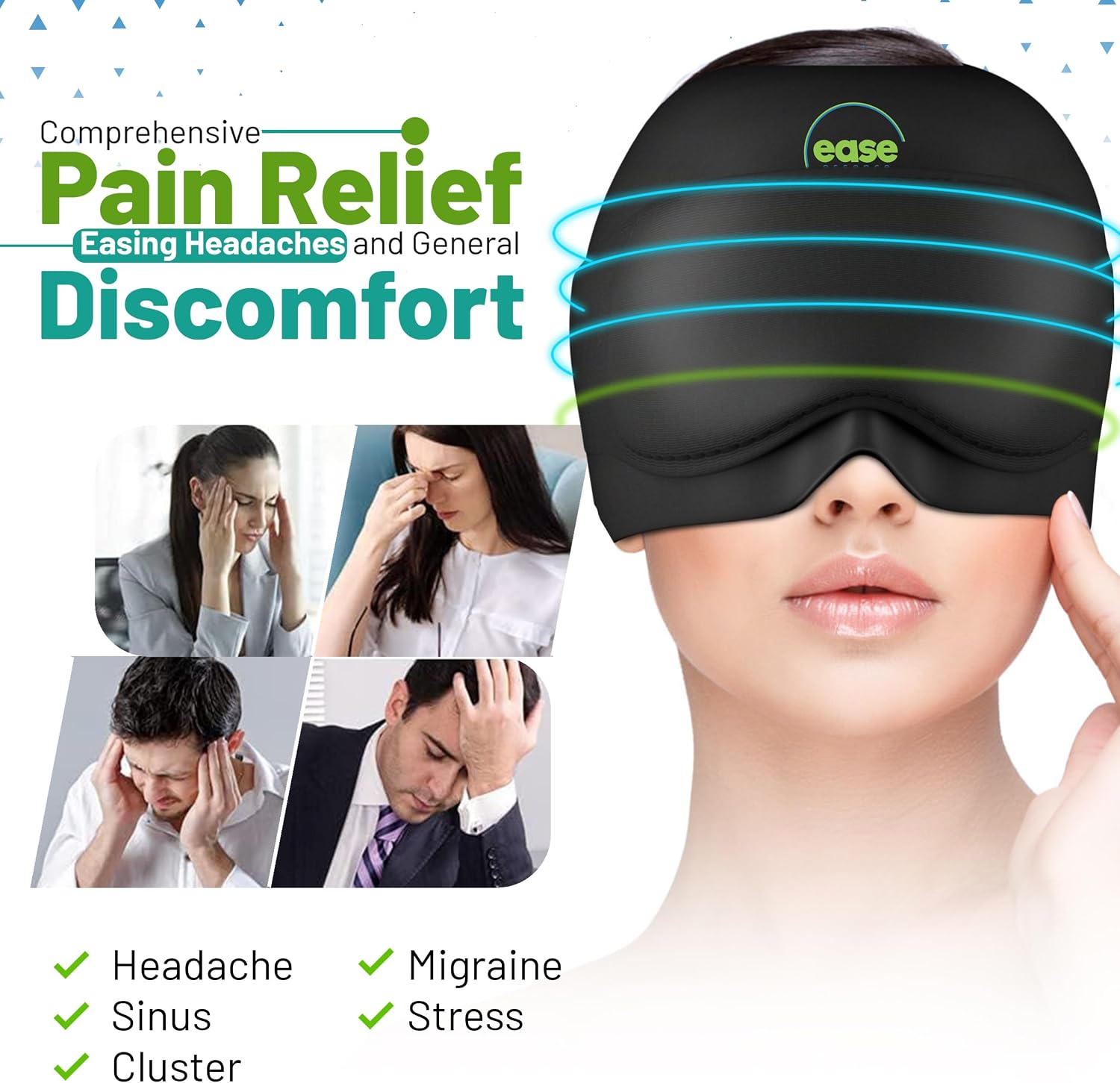
The American Migraine Foundation lists cold compresses as one of its accessible, drug-free comfort measures for migraine attacks. A 2013 clinical study found that applying cold to the head and neck at the onset of an attack significantly reduced reported pain in participants. While more large-scale research is always welcome, the evidence and the lived experience of many migraine sufferers point in the same direction: cold, applied early, can meaningfully ease a migraine.
Cold interrupts a migraine. Heat relaxes a tension headache. Knowing which you have is the most important decision you will make in the first five minutes of an attack.
The decision guide: which type of headache do you have?
The table below covers the most common headache types and which temperature therapy is generally more helpful. This is a general guide — individual responses vary, and if you are unsure about the nature of your headaches, a healthcare professional is the best resource.
| Headache type | Key characteristics | Reach for | Why |
|---|---|---|---|
| Migraine | Throbbing, one-sided, light/sound sensitivity, nausea | Cold | Vasoconstriction counters dilated vessels; nerve cooling dampens pain signals |
| Tension-type | Dull, pressing, band-like tightness, no throbbing | Heat | Relaxes tight scalp and neck muscles; vasodilation eases muscle fatigue |
| Sinus headache | Pressure behind forehead/cheeks, facial congestion | Cold | Reduces sinus inflammation and facial pressure |
| Stress / neck-tension | Starts at the neck or base of skull, spreads up | Heat | Loosens tight sub-occipital muscles; warms the neck and upper back |
| Mixed (tension + migraine) | Tight neck and throbbing head | Cold on head, gentle heat on neck | Targets each component with the appropriate mechanism |
How to apply cold correctly
Cold therapy is most effective when it is applied early, covers the right area, and is used safely. A few guidelines:
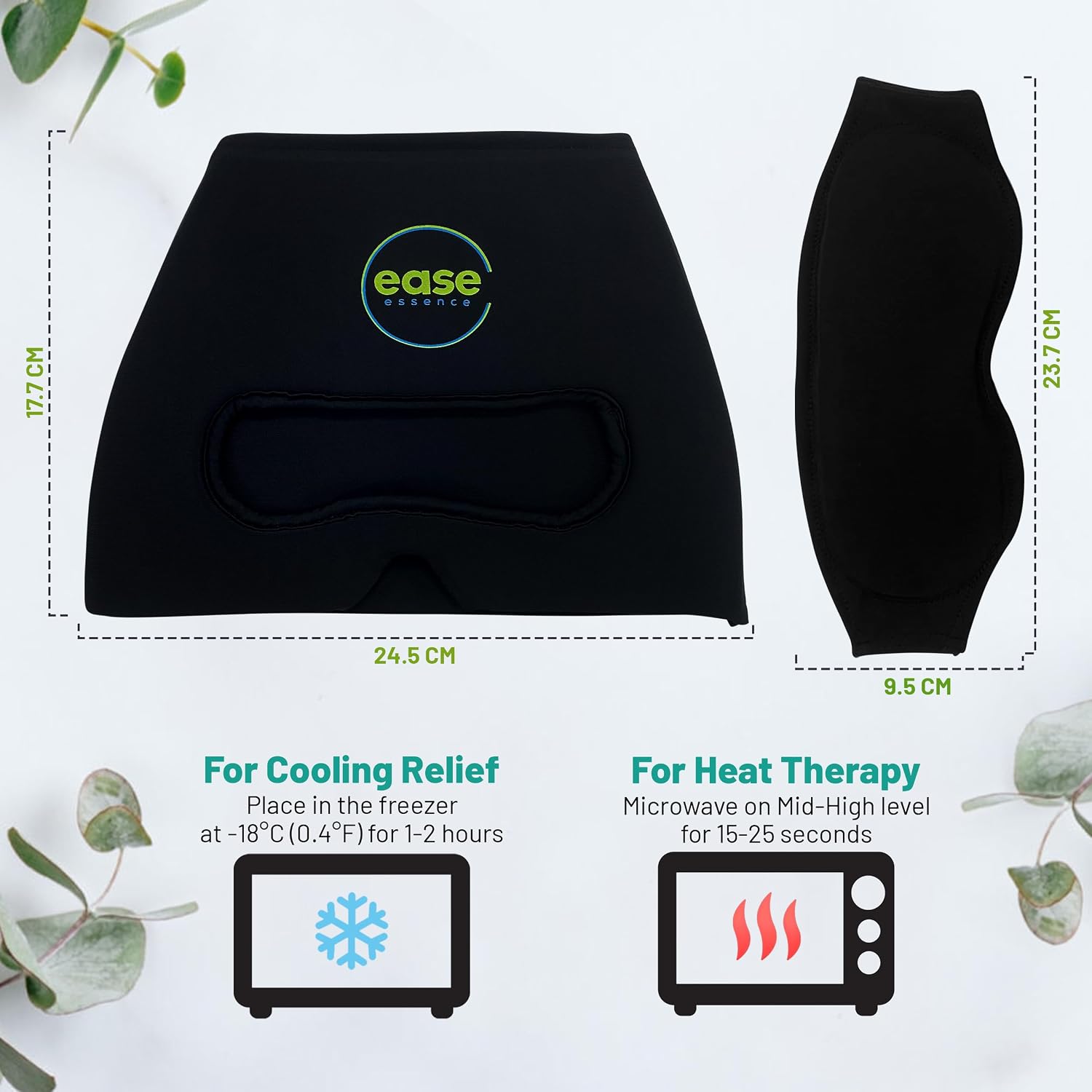
- Freeze to around −18°C (0°F) for at least one to two hours. A fully frozen gel pack holds temperature far longer than a slightly chilled one.
- Apply at the first sign of an attack — an aura, a hot temple, or the early dull ache — rather than waiting until the migraine is in full force.
- Cover the whole zone. Migraine pain is not a single point. Forehead, temples, and the back of the head and neck all benefit from contact. A wrap-around cap delivers this hands-free.
- Always keep a fabric layer between the gel and your skin to prevent ice burn, and limit each session to around 15–20 minutes. Remove if it becomes uncomfortable, rest briefly, then repeat.
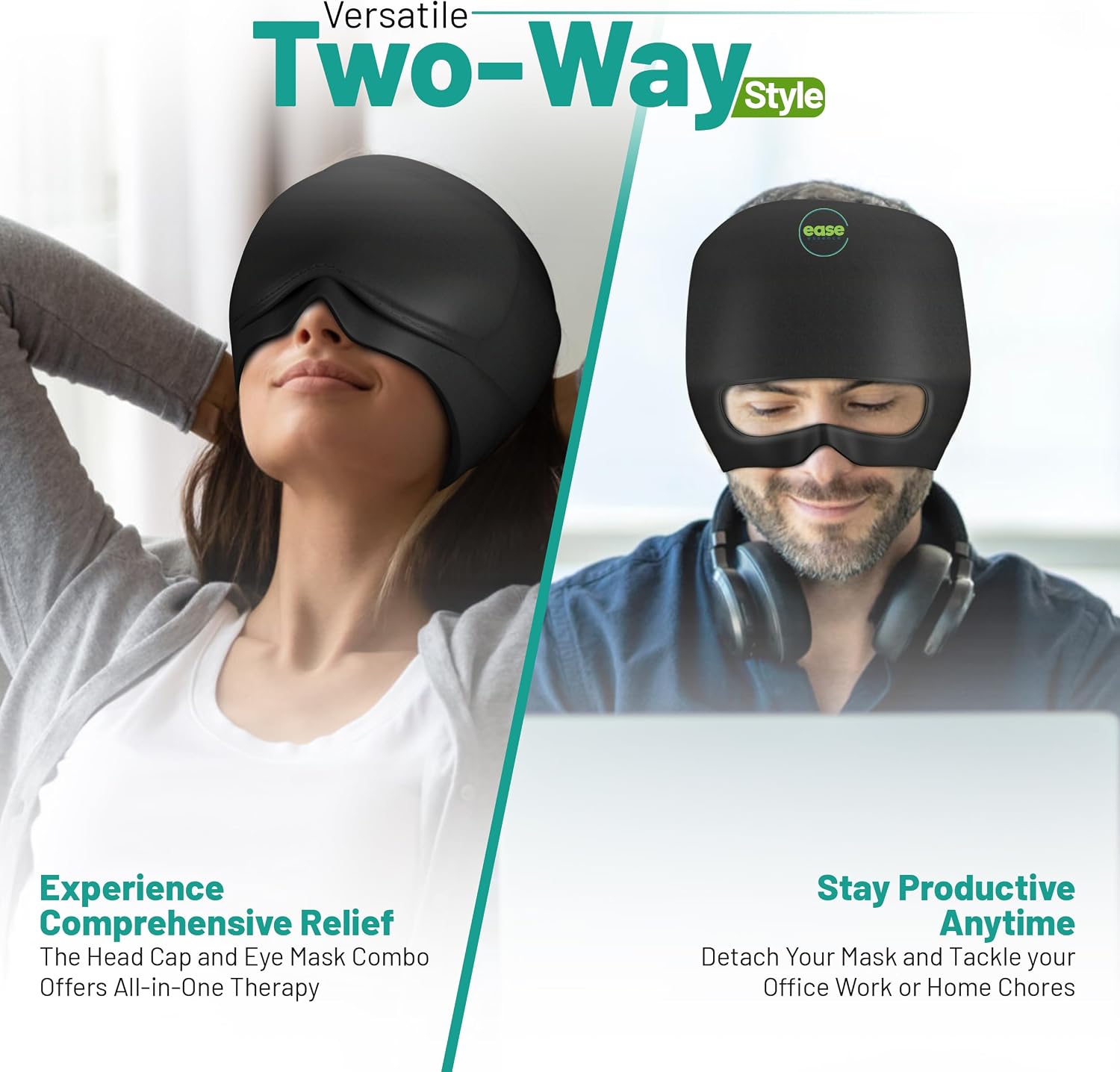
- Combine with darkness. Light sensitivity (photophobia) amplifies migraine pain. A detachable gel eye mask that also blocks light compounds the relief.
How to apply heat correctly
Heat therapy for headaches works best as a sustained, gentle warmth — not intense heat applied briefly.
- Microwave on medium-high for 15–25 seconds. The right temperature is comfortably warm when tested on the inside of your wrist — not hot. Overheating risks burns and does not improve results.
- Focus on the neck and upper shoulders for tension-type pain, rather than the crown of the head.
- Use for 15–20 minutes at a time, re-warming as needed. A moist, even warmth tends to penetrate tissue more effectively than dry heat.
- Pair with gentle stretching of the neck and shoulders, if tolerated, to compound the muscle-relaxation benefit.

One cap. Hot or cold. 360° relief.
The Ease Essence cap freezes for migraines and microwaves for tension headaches — with a detachable eye mask for darkness. No separate packs needed.
Can you alternate hot and cold? (Contrast therapy)
Contrast therapy — brief alternating rounds of cold and warmth — is sometimes used for muscle recovery and certain types of musculoskeletal pain. For headaches, the picture is more nuanced:
For tension-type headaches with significant neck stiffness, some people find that starting with gentle heat to loosen the muscles, then switching to cold to reduce any residual inflammation, provides more complete relief than either alone. This can work well when the tension is primarily muscular.
For a true migraine with throbbing, pulsing pain, staying with cold is generally the better strategy. Introducing heat between cold sessions can re-dilate blood vessels, potentially undoing the vasoconstriction you worked to achieve. If you try alternating for a migraine-tension combination, keep each session short (10–15 minutes), lead with cold, and finish with cold.
As with all aspects of headache management, individual responses vary. The best approach is the one you find consistently helpful through careful, safe self-experimentation.
Why one reusable cap beats two separate packs
The traditional approach — one frozen gel pack for migraines, one wheat bag for tension headaches, a separate eye mask for light sensitivity — means three items to store, two to prepare, and none that stay in place when you are lying down in a dark room trying to rest.
| Factor | Ease Essence cap | Separate ice pack + warm compress |
|---|---|---|
| Handles both hot and cold | Yes — freeze or microwave | No — two separate items |
| 360° head coverage | Yes — forehead, temples, back | No — one flat spot at a time |
| Hands-free while lying down | Yes — stretchy fit stays on | No — you hold it in place |
| Light-blocking | Yes — detachable gel eye mask | No |
| Mess and drips | Sealed gel, no drips | Condensation and leaks common |
A single cap that does both gives you the right tool regardless of which type of headache hits — and it is ready to use without hunting through two different drawers.
Frequently asked questions
Should I use heat or ice for a migraine?
For a classic throbbing migraine, most people find cold more helpful. Cold constricts dilated blood vessels and dampens pain-nerve conduction, which targets the two main drivers of migraine pain. Heat can make pulsing pain worse by widening vessels further. However, if your headache is tension-type — tight muscles at the neck, shoulders, or scalp rather than throbbing — heat may work better by relaxing those muscles. When in doubt, try cold first for any pounding headache.
Can I alternate hot and cold for a headache?
Some people find contrast therapy — brief alternating rounds of cold and gentle warmth — helpful for tension-type headaches, particularly when stiff neck muscles are involved. For a true migraine with throbbing pain, staying with cold is generally more effective, as adding heat between sessions can re-dilate vessels. If you try alternating, keep each session short (10–15 minutes) and always lead and finish with cold.
How do I use the Ease Essence cap for hot and cold therapy?
For cold therapy, place the cap or its detachable gel eye mask in the freezer at around −18°C (0°F) for at least one to two hours before use, then wear it for 15–20 minutes with the fabric layer between the gel and your skin. For heat therapy, microwave the cap on medium-high for 15–25 seconds, test on your wrist to check it is comfortably warm rather than hot, and apply in the same way. The same cap handles both, so you never need a separate warm compress or ice pack.
Medical disclaimer: This article is for general education only and is not medical advice. Ease Essence is a drug-free wellness product, not a medical device, and is not intended to diagnose, treat, cure or prevent any disease. If your headaches are frequent, severe, sudden or unusual, please consult a qualified healthcare professional.