How a migraine relief cap replaces your ice pack
⚡ Key takeaways
- Flat ice packs and frozen peas slip off the curved surface of your head and only chill a small patch — the very spot where they press hardest.
- You have to hold them. That means one hand stuck against your forehead while you try to rest — the opposite of what a migraine calls for.
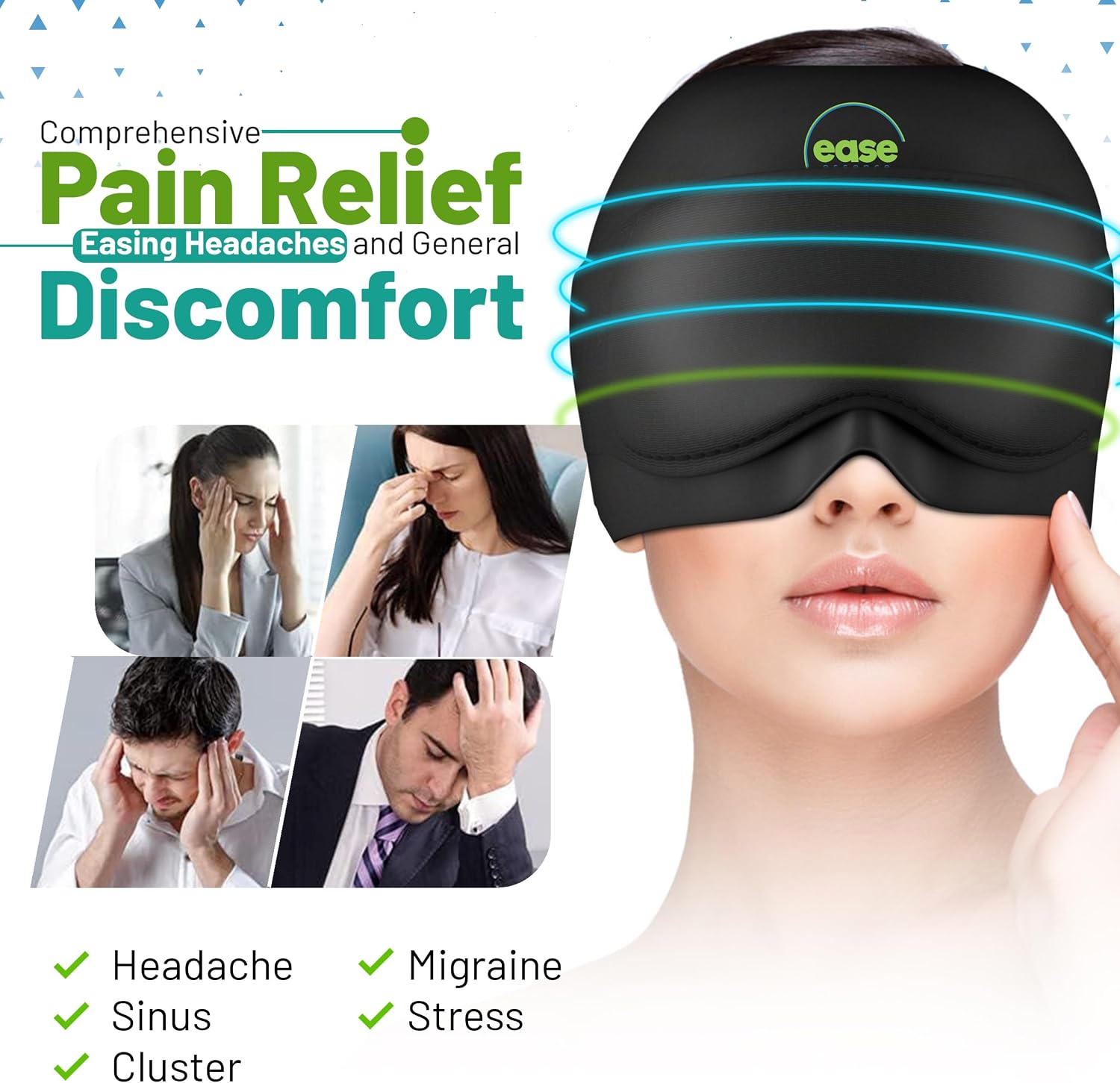
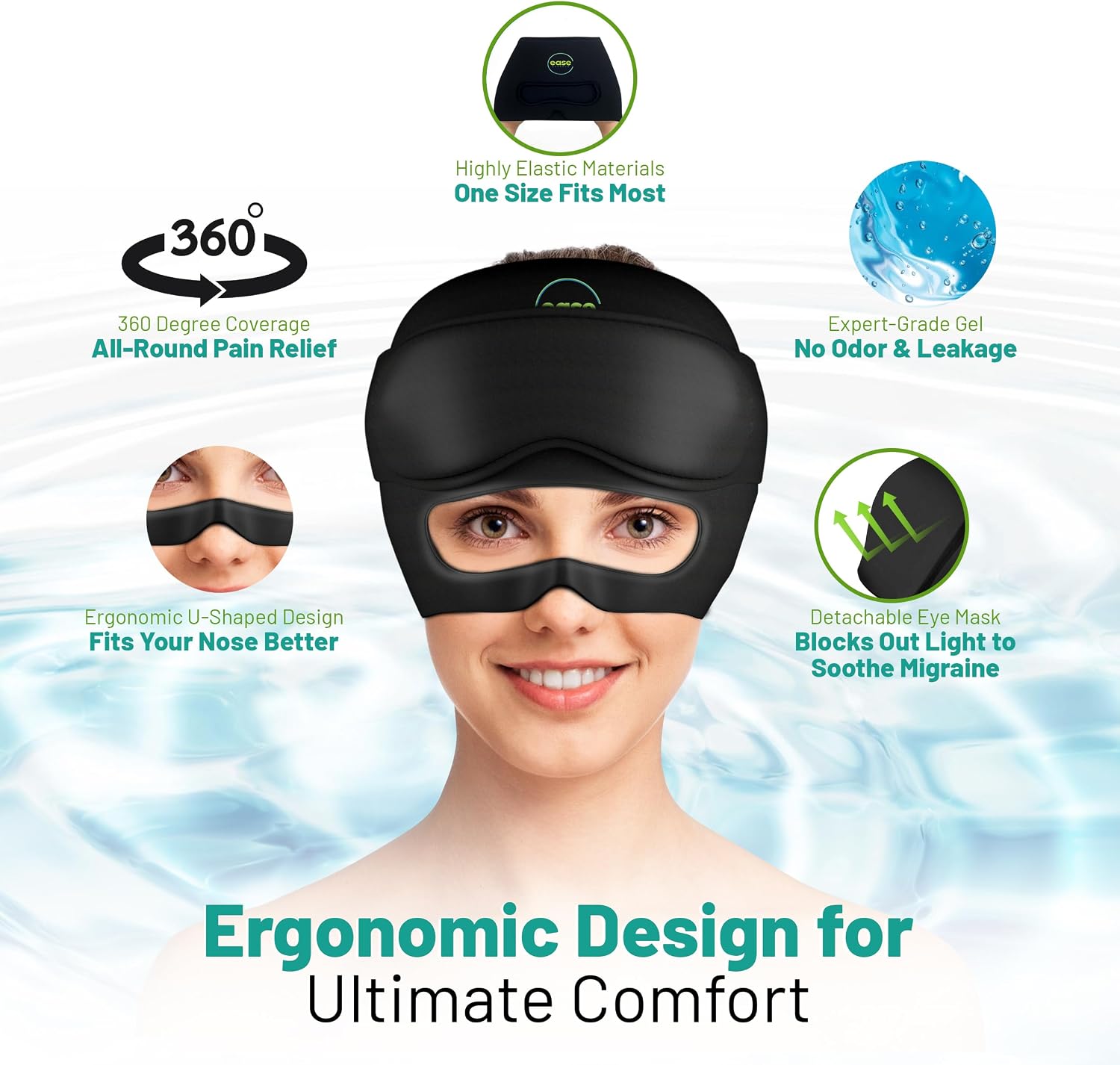
- A migraine relief cap solves all of this. Stretchy fabric wraps 360° around the forehead, temples, and back of the head — hands-free, sealed gel so no drips, one size fits most.
- The detachable eye mask adds light-blocking, tackling photophobia at the same time as the pain.
- It works hot or cold — freeze it for the throbbing phase, microwave it for tension-type neck pain.
When a migraine hits, most people reach for the nearest cold thing: a bag of frozen peas, a gel pack from the freezer, a damp towel. The instinct is sound — cold therapy has real physiological backing for migraine relief. The problem is not the cold. The problem is the delivery.
This guide walks through every practical limitation of a flat ice pack and explains how a purpose-built migraine relief cap addresses each one — without a single pill.
The problem with a bag of ice (or a flat gel pack)
It only covers one spot
Your head is not flat. A bag of frozen peas or a rectangular gel pack covers, at most, the patch of skin it presses against — typically a few square centimetres of forehead. Migraine pain, however, rarely stays in one place. It radiates to the temples, wraps behind the eyes, climbs to the crown, and often pulls at the base of the skull. A flat pack delivers cold to one small area while the rest of your head throbs on unaddressed.
It slides off the moment you move
The curved contour of the skull gives a flat pack nothing to grip. The second you tilt your head back against a pillow or shift position, it slides. You either spend the attack constantly repositioning it — frustrating, especially when even small movements amplify pain — or you give up on cold entirely.
You have to hold it
Holding a cold pack against your forehead for fifteen to twenty minutes is tiring. Your arm tires. Your elbow shifts. The pack shifts with it. Rest — the thing that actually helps a migraine — becomes nearly impossible when one hand is perpetually occupied.
Condensation and drips
Most improvised cold solutions — a damp cloth, a bag of ice, even cheaper gel packs with thin outer shells — sweat as they warm. Drips run down your face. The soaked fabric against your skin starts to feel clammy rather than cooling. If you're lying down in a dark room, the last thing you want is a cold trickle finding its way into your ear or behind your neck.
It does nothing for light sensitivity
Photophobia — sensitivity to light — is one of the most distressing features of a migraine attack for many people. A flat ice pack held to the forehead leaves the eyes completely exposed. Even ambient light through closed eyelids can feel overwhelming during a bad attack.
How a migraine relief cap solves each problem
360° coverage — forehead, temples, and the back of the head
A well-designed migraine cap is made from a stretchy, close-fitting fabric — typically a Lycra-blend — that wraps around the entire skull. The gel panel follows the contour of the head rather than lying flat against one patch of it. That means cool contact on the forehead, the temples, and the occipital region at the back simultaneously. This matters because migraine pain rarely confines itself to a single point, and broader cold contact means more of the pain area is being addressed at once.
Hands-free from the moment you put it on
Because the cap stretches to conform and sits snugly, it stays in place on its own. You can lie back, roll onto your side, press a pillow against your face — the cap moves with you. Both hands are free. You can hold a phone, pull a blanket, or simply let your arms rest. That sounds like a small thing; during a migraine, it is not.
Sealed gel — no drips, no mess
The gel panels in a purpose-built migraine cap are sealed inside the fabric rather than sitting inside a plastic bag. The outer shell stays dry. There is no condensation to drip because the gel is enclosed, and the fabric layer between gel and skin absorbs any minor surface moisture. You can lie on a pillow without soaking it.
The detachable eye mask adds a layer of darkness
The Ease Essence Migraine Relief Cap includes a detachable gel eye mask that clips on to the front of the cap. When fitted, it blocks ambient light and delivers gentle cold across the eyelids and the bridge of the nose — an area that can be particularly painful during an attack. When you don't need it — say, for a tension headache without photophobia — it unclips in seconds.
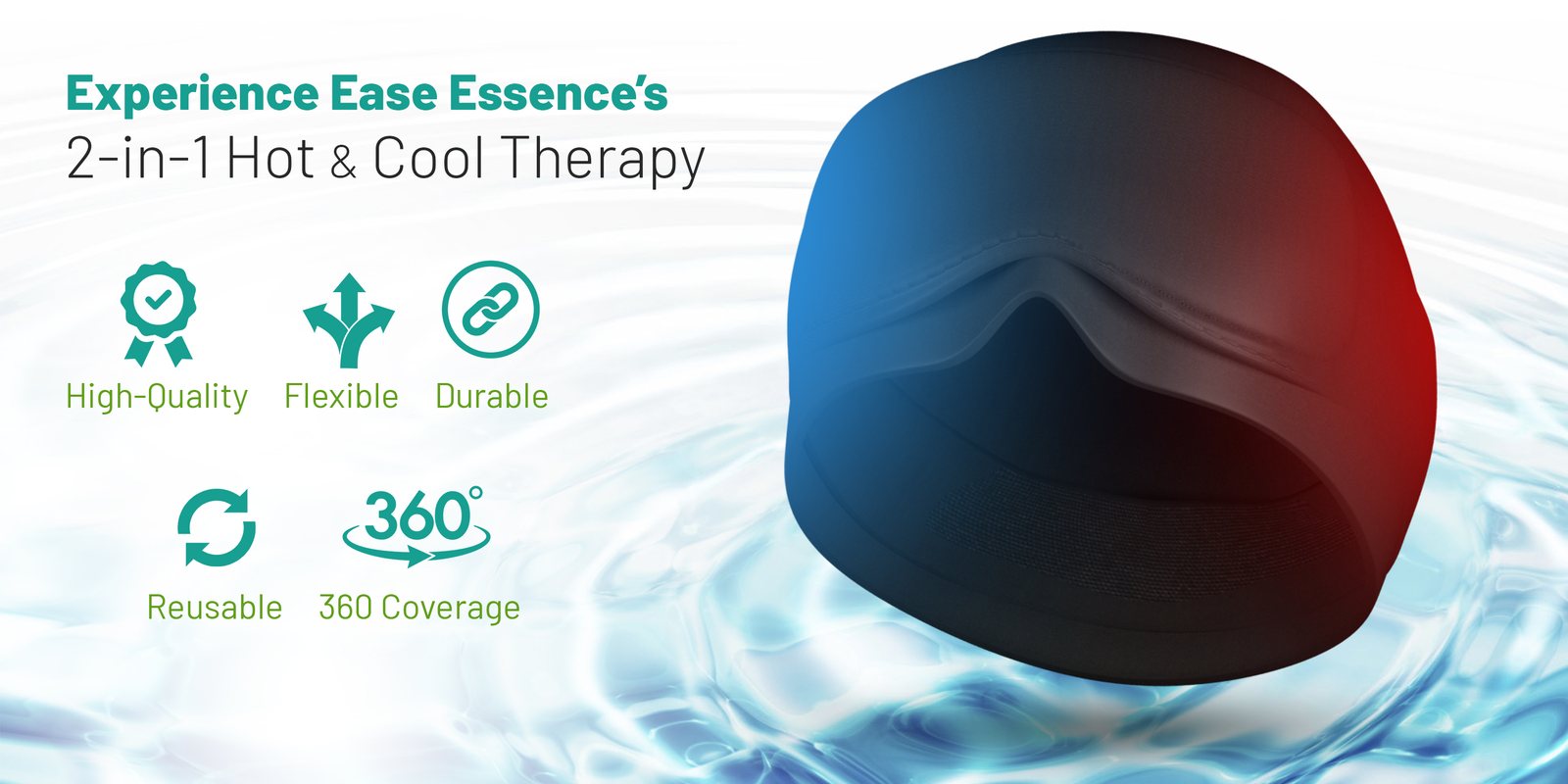
Hot or cold — one product, two therapies
A bag of ice is only ever cold. The Ease Essence cap goes in the freezer for cold therapy or in the microwave for heat. Heat therapy is particularly effective for tension-type headaches originating at the back of the neck and shoulders, where warmth relaxes contracted muscles. A single cap handles both, depending on what your head needs that day.
Head-to-head comparison
| Factor | Migraine relief cap | Flat gel ice pack | Bag of frozen peas |
|---|---|---|---|
| Coverage | 360° — forehead, temples, back of head | One flat patch | One lumpy patch |
| Hands-free | Yes — stays on lying down | No — you hold it | No — you hold it |
| Light-blocking | Yes — detachable eye mask | None | None |
| Mess / drips | Sealed gel, no drips | Condensation on outer shell | Leaks, freezer burn, condensation |
| Hot & cold | Both — freeze or microwave | Cold only | Cold only |
| Reusable | Yes — rinse and refreeze | Yes — limited cycles | No — degrades after use |
How to use a migraine relief cap: a quick guide
Getting the most from a migraine cap comes down to preparation and timing.
For cold therapy
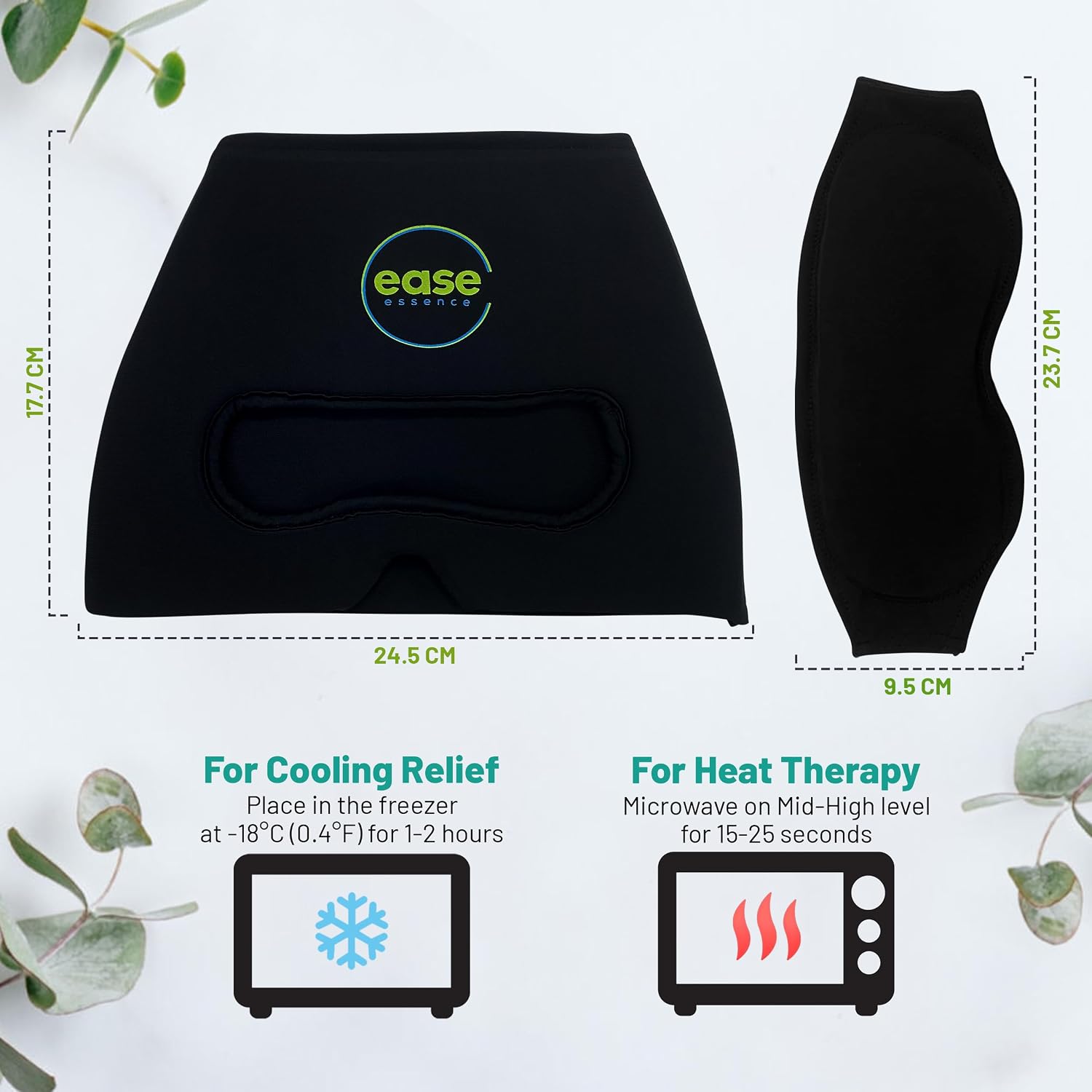
- Freeze at −18 °C (0 °F) for 1–2 hours before you expect to need it. Keeping one ready in the freezer means it's available at the first warning sign — aura, temple heat, the early dull ache — rather than scrambling when the pain has already peaked.
- Put it on at the first hint of a migraine. Cold therapy tends to be most effective early in an attack, before the pain fully establishes itself.
- Keep a fabric layer between the gel and your skin. The cap's inner lining handles this by design. Use for around 15–20 minutes at a time and remove it if the cold becomes uncomfortable.
- Attach the eye mask if light is bothering you. Lie in a dark, quiet room.
For heat therapy
- Microwave on medium-high for 15–25 seconds. Pause and check the temperature — gel can develop hot spots. It should feel warm and comforting, never scalding. Add time in 5-second increments if needed.
- Check the temperature on your inner wrist before placing it on your head.
- Heat works well for tension at the neck and base of the skull. Experiment with what your headaches respond to.

The cap that replaces the ice pack
360° wrap, hands-free, sealed gel, detachable eye mask, hot or cold. One size fits most — on Amazon now.
When to choose cold, when to choose heat
Not all head pain responds the same way. As a general (non-medical) guide:
- Cold is typically preferred for the throbbing, pulsing pain of a classic migraine attack — especially when pain is behind the eyes or at the temples. The science of why cold works is covered in detail in our article on why cold therapy stops a migraine in its tracks.
- Heat tends to suit tension-type headaches that feel like a tight band across the forehead or a knot at the back of the neck, where muscle tension is driving the pain.
- Some people find alternating hot and cold useful, though responses are individual. If you are unsure which is right for your headaches, speak with a healthcare professional.
Frequently asked questions
Is a migraine relief cap better than an ice pack?
For most people, yes. A wrap-around migraine relief cap covers the forehead, temples, and back of the head simultaneously, stays on hands-free while you lie down, and uses sealed gel that won't drip. A flat ice pack covers only one small area, slides off, and requires you to hold it in place. Both deliver cold therapy; the cap simply delivers more of it with less hassle.
Can I use a migraine relief cap for heat therapy too?
Yes. Most gel-filled migraine caps — including the Ease Essence cap — can be microwaved for heat therapy as well as frozen for cold. Heat is particularly useful for tension headaches at the back of the neck, while cold is often preferred for throbbing migraine pain at the temples and forehead.
How long do I freeze a migraine cap before use?
Place the cap in the freezer at around −18 °C (0 °F) for 1 to 2 hours before use. This gives the gel time to reach a therapeutically cold temperature while remaining pliable enough to conform to your head. Do not place it directly against bare skin; keep a layer of fabric between the gel and your skin at all times.
Medical disclaimer: This article is for general education only and is not medical advice. Ease Essence is a drug-free wellness product, not a medical device, and is not intended to diagnose, treat, cure or prevent any disease. If your headaches are frequent, severe, sudden or unusual, please consult a qualified healthcare professional.