Why cold therapy stops a migraine in its tracks
⚡ Key takeaways
- Cold helps migraines through three mechanisms: vasoconstriction (narrowing dilated vessels), slowing pain-nerve conduction, and a numbing effect.
- Timing matters most. Cold works best applied at the first sign of an attack, not an hour in.
- Coverage matters. A 360° wrap beats a small flat ice pack because migraine pain spans the forehead, temples and back of the head.
- Use ~15–20 minutes with fabric between gel and skin. Drug-free and repeatable.
If you've ever pressed something cold to your forehead during a migraine, you already know the instinct is real. Cold feels good on a pounding head — and there's solid physiology behind why. This guide breaks down how cold therapy eases migraine pain, what the research shows, and how to apply it so it actually works.
What happens in your head during a migraine
A migraine is far more than a bad headache. It's a neurological event involving the trigeminal nerve system, waves of altered brain activity, and the release of inflammatory molecules that make blood vessels around the brain dilate and become painfully sensitive. That dilation and inflammation is a big part of the throbbing, pulsing quality so many people describe.
This is exactly where cold comes in.
The three ways cold therapy helps
1. Vasoconstriction — narrowing the vessels
Cold causes blood vessels to constrict. By narrowing the dilated, irritated vessels around the head, cold can take the edge off the pulsing sensation and reduce local blood flow that contributes to throbbing pain.
2. Slowing the pain signal
Lowering tissue temperature slows the conduction speed of nearby sensory nerves. In practical terms, cooling the skin and superficial tissues can dampen how efficiently pain signals travel — turning down the volume on the hurt.
3. A numbing, distracting effect
Cold provides a competing sensation. Just as rubbing a bumped elbow helps, the cool input can partially mask pain through the body's own gating of sensory signals, while gently numbing the area.
Cold doesn't cure the migraine — it interrupts the parts of the attack that make it feel unbearable, buying you calmer minutes to rest and recover.
What the research says
The most-cited modern study on this is a 2013 clinical trial in the Hawai'i Journal of Medicine & Public Health (Sprouse-Blum and colleagues). Participants applied a frozen wrap to the carotid arteries at the front of the neck at the onset of a migraine. The researchers reported a significant reduction in recorded pain compared with control conditions. While more research is always welcome, it supports what migraine sufferers have long reported: targeted cold, applied early, can meaningfully reduce pain.
Major patient organizations such as the American Migraine Foundation also list cold compresses among accessible, drug-free comfort measures for migraine attacks.

360° cold, exactly where it hurts
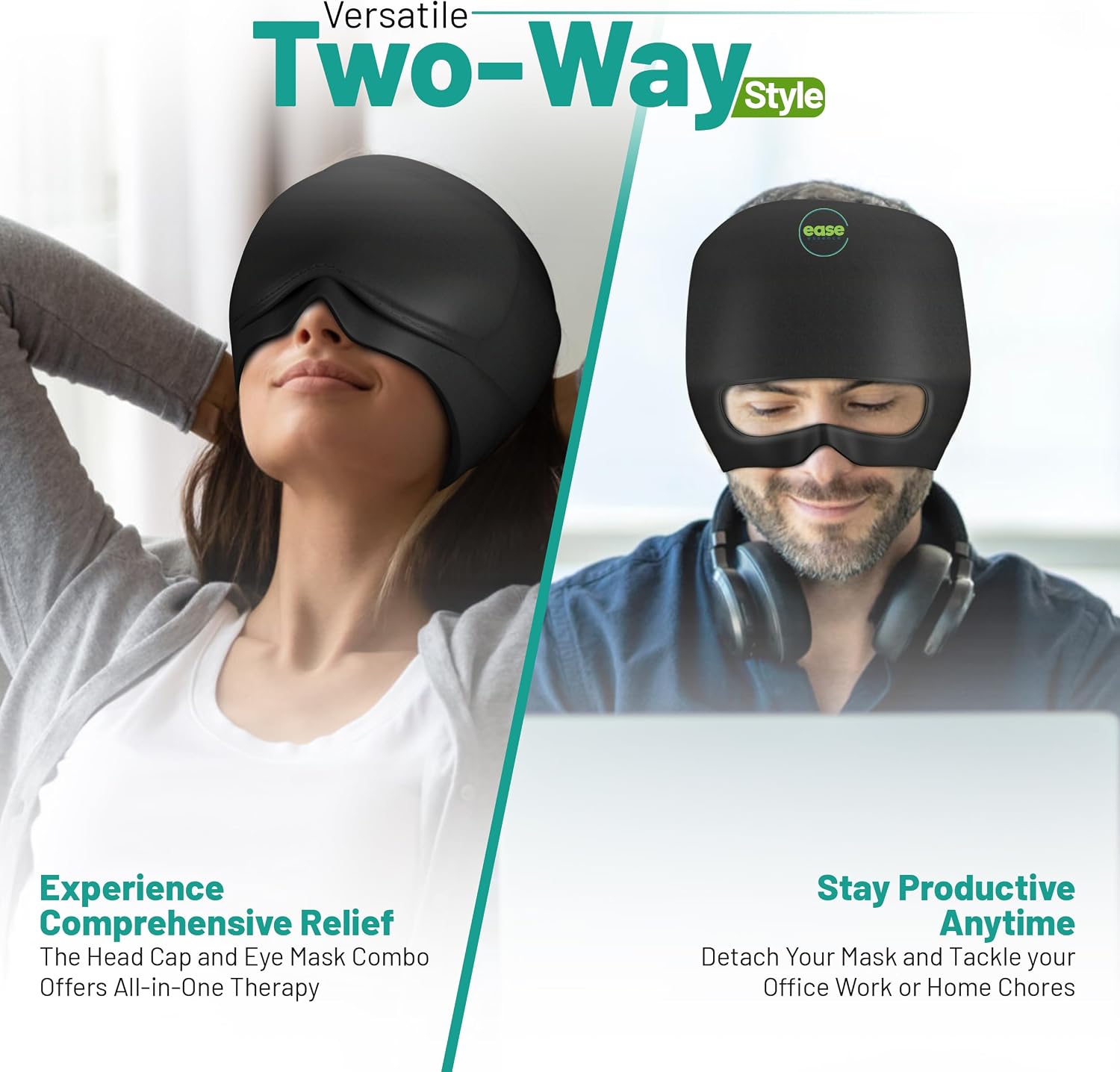
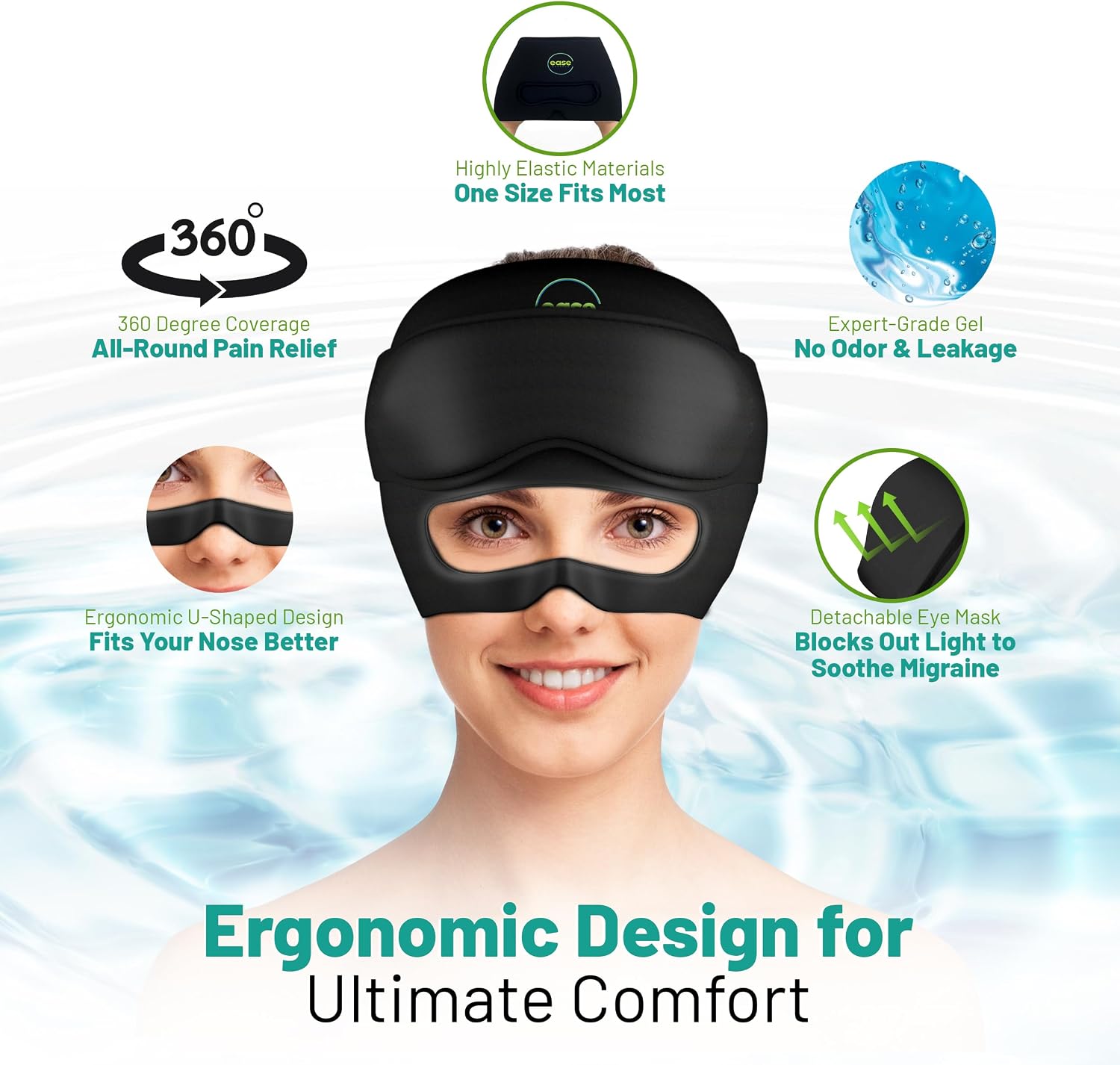
The Ease Essence cap wraps cold around your forehead, temples and the back of your head — hands-free, and it stays on while you lie down.
How to use cold therapy correctly
Doing it right makes a real difference. A few evidence-aligned tips:
- Move fast. Apply cold at the first hint — aura, a hot temple, the early dull ache — rather than waiting until the migraine peaks.
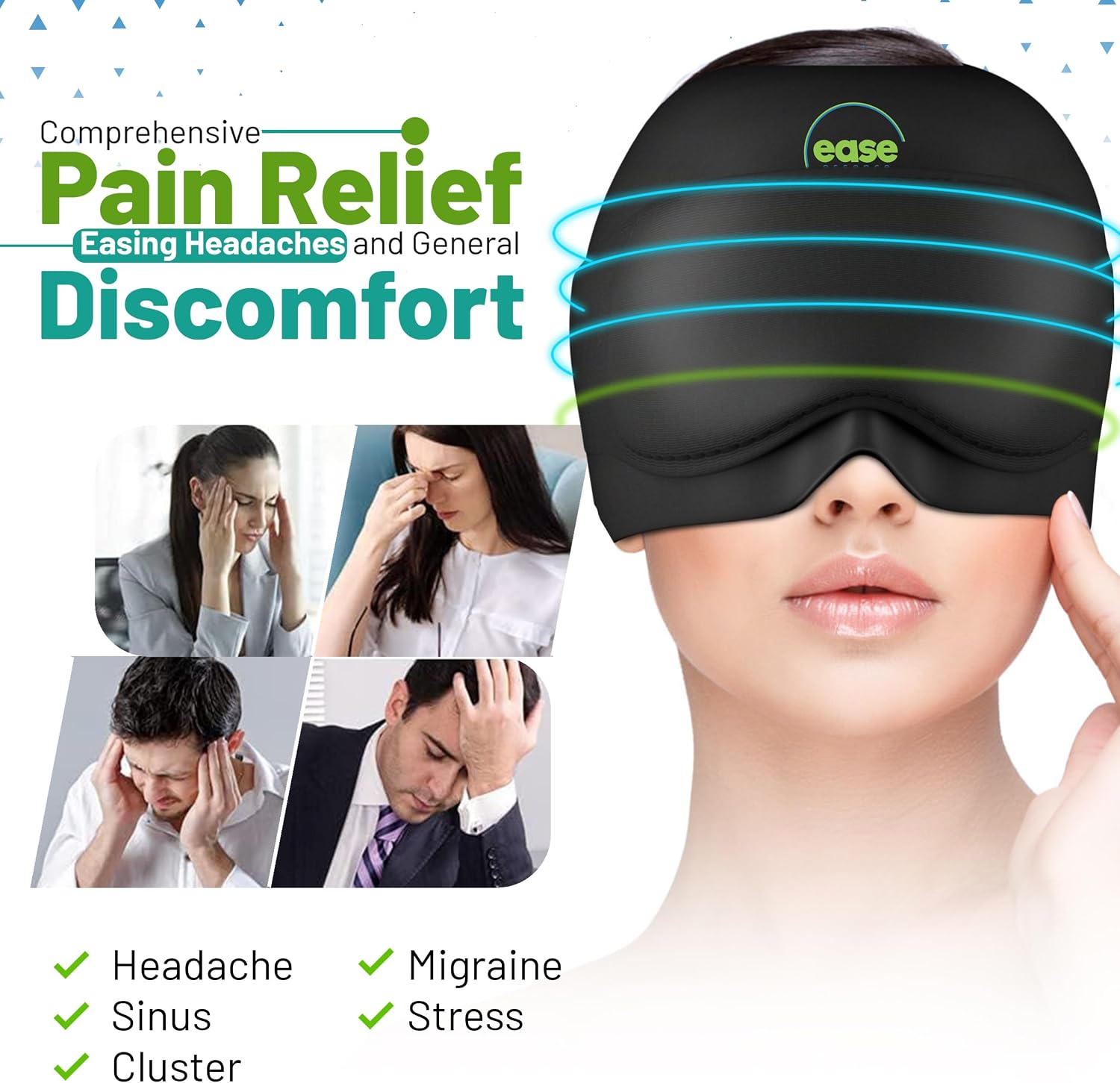
- Cover the whole zone. Migraine pain isn't a single point. A wrap that contacts the forehead, temples and back of the head delivers more complete relief than a small flat pack.
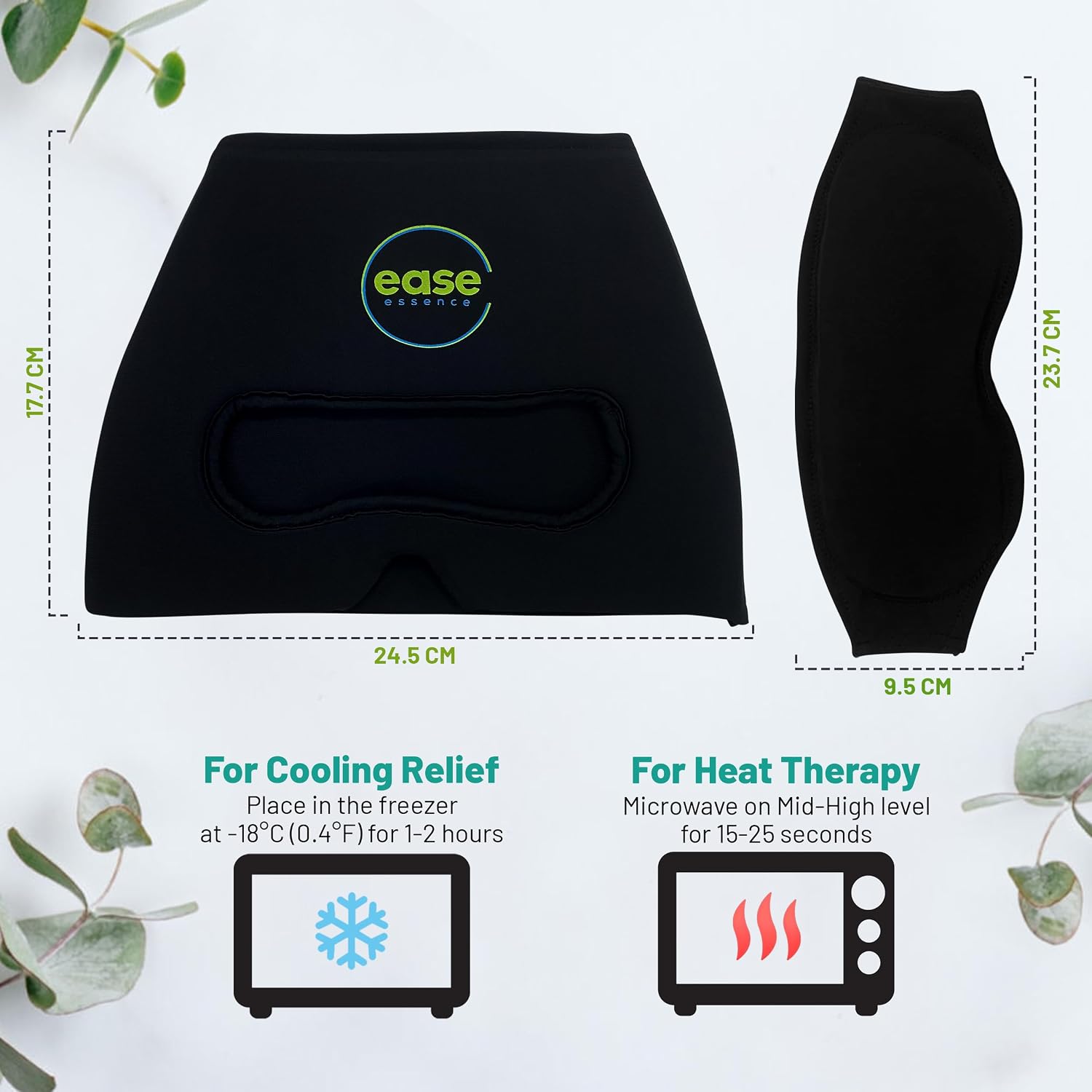
- Protect your skin. Always keep a layer of fabric between frozen gel and bare skin, and limit sessions to roughly 15–20 minutes.
- Go dark too. Light sensitivity (photophobia) amplifies migraine. Combining cold with light-blocking can compound the relief.
- Stay still. Cold works best paired with rest in a quiet space.
Why a cap beats a bag of frozen peas
| Factor | Wrap-around cold cap | Flat ice pack / frozen peas |
|---|---|---|
| Coverage | 360° — forehead, temples, back | One small, flat spot |
| Hands-free | Yes — stays on lying down | No — you hold it |
| Light-blocking | Optional eye mask | None |
| Mess | Sealed, no drips | Condensation & drips |
This is the whole idea behind the Ease Essence Migraine Relief Cap: full-head cold (or heat) contact, hands-free, with a detachable eye mask for darkness — so the therapy stays exactly where you need it.
Frequently asked questions
Does cold therapy help migraines?
For many people, yes. Cold is thought to ease migraine by narrowing dilated blood vessels, slowing pain-signal conduction, and numbing the area. A 2013 clinical study found cold applied at onset significantly reduced reported pain. Results vary by person.
Where should I apply cold?
Wherever the pain centers — usually the forehead, temples and back of the head and neck. A wrap-around cap covers all of these at once.
How long should I use a cold cap?
About 15–20 minutes at a time, with fabric between gel and skin. Remove it if it becomes uncomfortable, and repeat after a break.
Medical disclaimer: This article is for general education only and is not medical advice. Ease Essence is a drug-free wellness product, not a medical device, and is not intended to diagnose, treat, cure or prevent any disease. If your headaches are frequent, severe, sudden or unusual, please consult a qualified healthcare professional.