Tension headache causes & drug-free solutions
⚡ Key takeaways
- Tension headaches feel like a tight band around the head — dull, pressing, and usually on both sides, often with neck and shoulder tightness.
- Common causes include stress, screen and desk posture, neck and shoulder muscle tension, jaw clenching, poor sleep, dehydration, and eye strain.
- Heat is often the better first choice for tension-type headaches — warmth relaxes the tight muscles driving the pain, whereas cold is usually more effective for migraine's throbbing vascular phase.
- Drug-free fixes work by targeting the cause — loosening muscles, resetting posture, calming the nervous system, and restoring basics like hydration and sleep.
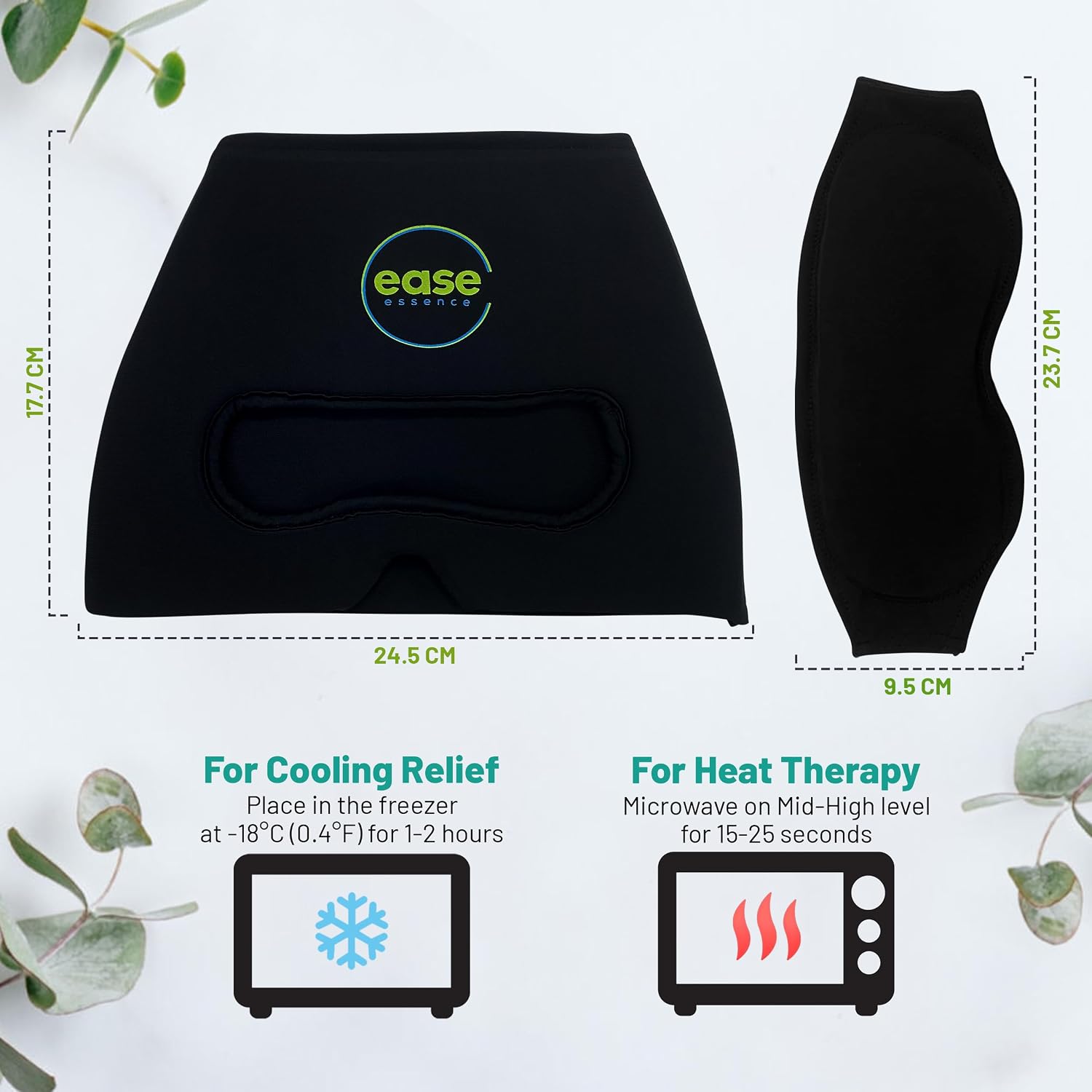
- The Ease Essence cap microwaves in 15–25 seconds for soothing 360° heat around the scalp, or chills in the freezer when cooling is what you need.
Tension headaches are the most common headache type, yet they are often dismissed as "just stress." They are real, they are disruptive, and — importantly — they respond well to non-medication strategies when you understand what is driving them. This guide covers what causes tension headaches, how to tell them apart from migraines, and a full toolkit of drug-free ways to relieve them.
What a tension headache actually feels like
The hallmark of a tension headache is a dull, pressing, or squeezing sensation — often described as a tight band or vice clamped around the head. Unlike a migraine, the pain is typically on both sides of the head and does not pulse or throb. It can sit behind the eyes, at the temples, across the forehead, or at the base of the skull where the neck muscles attach.
You might also notice:
- Tightness or tenderness in the neck and shoulders
- A feeling of pressure behind the eyes without visual disturbance
- Mild sensitivity to light or noise — but rarely the severe photophobia of a migraine
- No nausea, vomiting, or aura (the warning sensations that precede many migraines)
Tension headache vs. migraine — the key difference
It is worth being clear on the distinction, because the best drug-free strategy depends on which type you have. A migraine is a neurological event: pain is often one-sided, throbbing or pulsing, frequently accompanied by nausea or vomiting, and worsened by routine physical activity. Light and sound sensitivity are usually pronounced. A tension headache, by contrast, is typically bilateral, non-pulsing, and does not worsen significantly with movement.
The two can overlap — some people experience both — and if you are unsure, a healthcare professional can help clarify the pattern. For this article we focus on the tension type.
Common causes of tension headaches
Stress and emotional tension
Stress is the most frequently reported trigger. When you are anxious, overwhelmed, or emotionally strained, the muscles of the scalp, jaw, and neck tighten involuntarily. Sustained tension in those muscles can generate a headache that builds gradually through a stressful day.
Screen and desk posture
Spending hours looking at a screen — especially with the monitor too low, the chin jutted forward, or the shoulders rounded — places sustained load on the cervical spine and the muscles of the upper back and neck. This "tech neck" posture is a common culprit behind afternoon headaches that cluster at the base of the skull or the temples.
Neck and shoulder muscle tension
Even without poor posture, chronically tight trapezius and neck muscles can refer pain into the head. People who carry physical tension in these areas — from sitting at a desk, driving long distances, or physical labor — are particularly susceptible.
Jaw clenching and teeth grinding (bruxism)
Many people clench their jaw during stress or grind their teeth at night without realizing it. The temporalis muscle, which fans across the side of the skull, is heavily involved in jaw movement. Overworking it creates a characteristic ache at the temples and along the sides of the head.
Poor or disrupted sleep
Insufficient sleep lowers pain thresholds and keeps the body in a low-grade stress state. Waking up with a headache is often linked to overnight jaw clenching, shallow breathing, or simply not enough restorative sleep.
Dehydration
Even mild dehydration can trigger a headache. The brain is surrounded by fluid, and when overall hydration drops, that cushioning is slightly reduced — which can contribute to a dull, diffuse head pain, particularly after waking up or on hot days.
Eye strain
Prolonged close focus — on screens, paperwork, or detailed tasks — fatigues the muscles around and behind the eye. The result is often a pressing ache behind the eyes that can radiate to the forehead or temples.
Drug-free solutions for tension headaches
1. Heat therapy — often the best first step
Because muscle tightness is a central driver of tension headaches, heat is frequently more effective than cold for this headache type. Warmth increases blood flow to the treated area, encourages muscle fibers to relax, and soothes the connective tissue and fascia around the scalp and neck.
Practical application: place a warm compress or a microwaved heat cap against the back of the neck and across the scalp for 15–20 minutes. You can also warm the shoulders if that is where you carry your tension. The Ease Essence cap microwaves in roughly 15–25 seconds and delivers gentle, even warmth around the full circumference of the head — reaching the temples, the base of the skull, and the forehead simultaneously.
If you want to compare heat and cold in more detail for different headache types, see our guide on hot vs. cold therapy for migraines.
2. Posture and screen-break habits
For screen-related tension headaches, the most effective long-term intervention is breaking the postural cycle that creates them. A practical starting point is the 20-20-20 rule: every 20 minutes, look at something 20 feet away for 20 seconds. This allows the eye muscles to release their focus tension and prompts you to shift your posture.
Additionally, check that your monitor is at eye level (not below, which tilts the head down and loads the neck) and that your shoulders are relaxed away from your ears. A lumbar support can help maintain the natural curve of the lower spine, which in turn reduces compensatory tension higher up.
3. Neck and shoulder stretches
Gentle mobility work can release the specific muscles that contribute most to tension headaches. A simple sequence to try:
- Chin tuck: sitting tall, draw the chin straight back (not down). Hold for 5 seconds, repeat 10 times. This decompresses the cervical spine and resets forward-head posture.
- Lateral neck stretch: tilt the right ear toward the right shoulder and hold for 20–30 seconds. Switch sides. Keep the opposite shoulder down.
- Trapezius release: gently roll the shoulders backward 10 times, then hold the arms behind the back and draw the shoulder blades together.
- Suboccipital release: place both thumbs at the base of the skull and apply gentle upward pressure for 30–60 seconds. This targets the small muscles between the skull and the top vertebrae, which are often tight in tension headache sufferers.
Move slowly, breathe through each stretch, and stop if anything feels sharp.
4. Stress management and breathing
Because stress is the most common trigger, anything that engages the parasympathetic nervous system (the "rest and digest" state) can help. Diaphragmatic breathing — long, slow inhales that expand the belly rather than just the chest — activates the vagal pathway and signals the body to reduce the muscle-tightening stress response.
A simple technique: inhale for a count of four, hold for four, exhale for six to eight. Even three to five minutes of this during a headache onset can meaningfully reduce intensity for many people. Paired with heat therapy and a quiet room, it addresses both the physical and neurological components of a tension headache.
5. Hydration and sleep
These are the fundamentals, and they matter more than most people give them credit for. If you notice headaches clustering in the late afternoon or on waking, keep a simple log: how much water did you drink, and how many hours of sleep did you get? For many people, addressing a chronic low-grade dehydration pattern — drinking water more steadily through the day rather than in sporadic large amounts — reduces headache frequency noticeably over a few weeks.
For sleep, prioritizing a consistent wake time (even on weekends) and reducing screen light in the hour before bed are two evidence-aligned habits that cost nothing to try.
6. Managing jaw clenching
If you suspect bruxism, a few approaches are worth trying before seeking professional input. During the day, a useful cue is to check in every hour: are your teeth touching? They should rest slightly apart. Placing a small reminder on your monitor can help break the habitual clenching reflex. Gentle jaw stretches — opening the mouth wide and then slowly moving the jaw side to side — can release the temporalis and masseter muscles. A dentist can evaluate you for a night guard if overnight grinding is suspected.
7. When cold can help instead
Cold therapy is not the primary recommendation for tension headaches, but there are situations where it may help. If your headache includes a hot, flushed feeling at the forehead or temples — which can happen when stress pushes blood pressure up transiently — a cool compress on the forehead can feel soothing. Some people also find cold more comfortable than heat on certain days. The Ease Essence cap stores in the freezer and delivers gentle cooling around the full head when that is what your body is asking for. You might also experience headaches that have features of both tension and migraine — in those cases, experimenting with both temperatures to find what works for you is a reasonable approach. Our hot vs. cold therapy guide covers the decision in more depth.
How the Ease Essence cap fits into a tension-headache routine
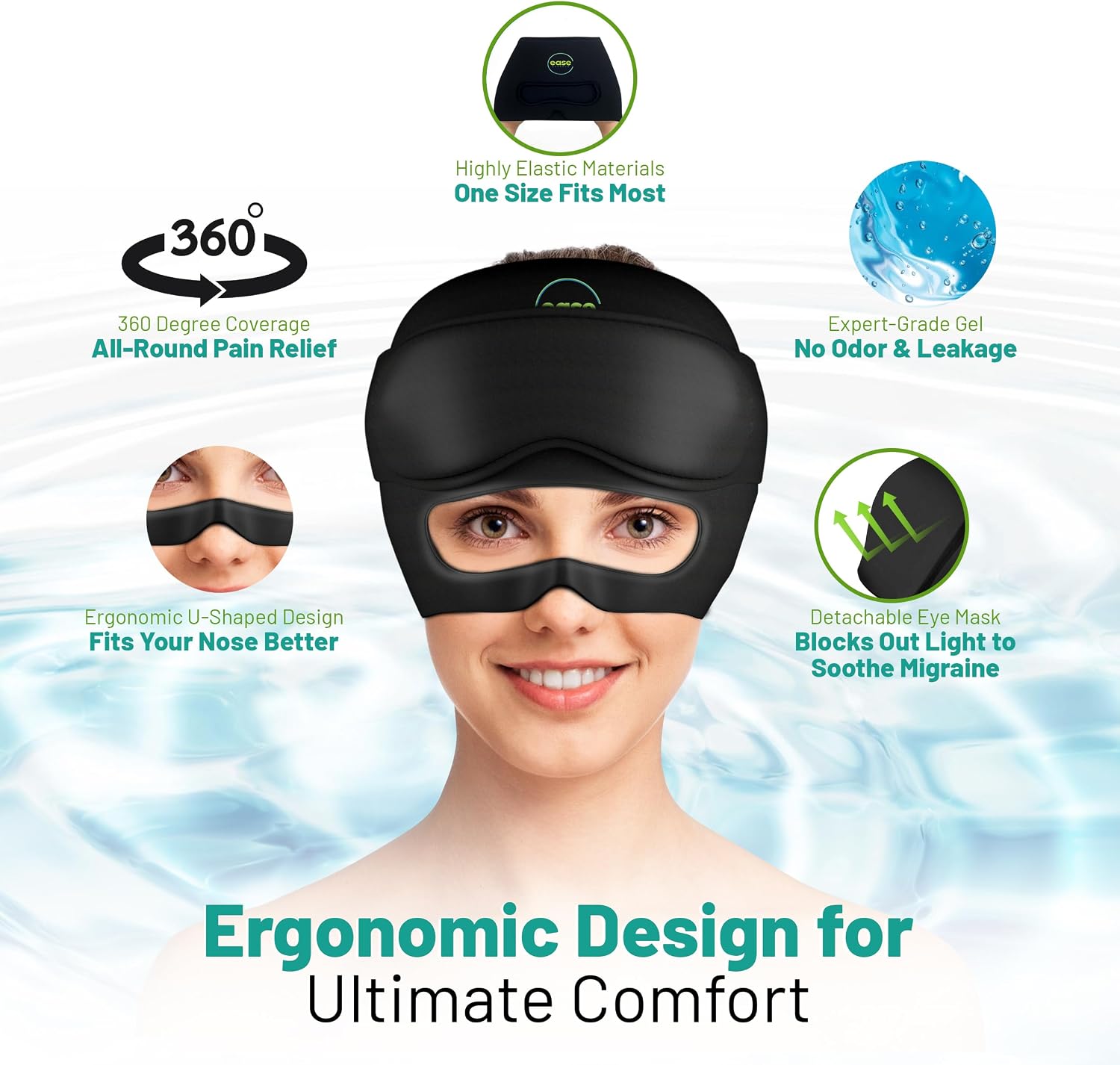
The Ease Essence Migraine Relief Cap is designed as a drug-free, hands-free thermal wrap for the full head. For tension headaches specifically, the hot mode is where it shines. Microwave it for 15–25 seconds, pull it on, and the stretchy 360° design delivers even warmth across the temples, forehead, back of the scalp, and the critical area at the base of the skull where neck muscles attach. The gentle compression of the fabric itself can add a soothing pressure that many people find calming.
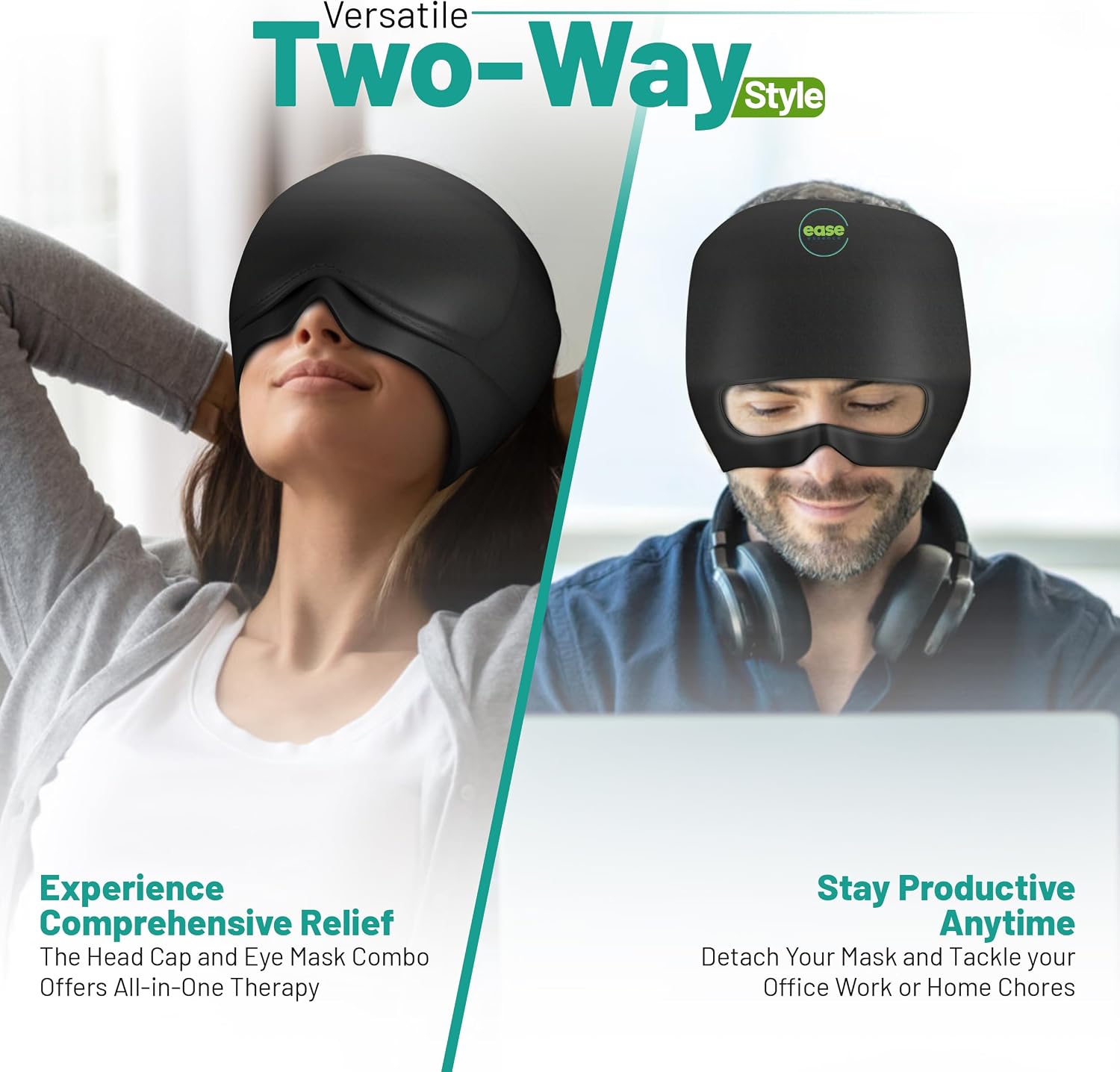
The detachable gel eye mask — worn over the eyes — simultaneously blocks light and adds localized cooling or warmth at the eye area, making it easy to customize the experience. If you are dealing with a tension headache alongside eye fatigue or the early stages of a stress-triggered migraine, having both options in one cap is a practical advantage.
Pair the cap with a 15-minute rest, the breathing exercise above, and a large glass of water. That combination — heat, compression, breathing, hydration — covers the major drug-free levers for tension headache relief in one session.

Hot or cold — wrapped around you
The Ease Essence cap microwaves for soothing heat on tight muscles, or chills for cooling relief. Stretchy 360° fit, hands-free.
When to see a doctor
Most episodic tension headaches are benign and respond to the approaches above. However, there are situations where it is important to speak with a healthcare professional:
- Frequency is increasing — if headaches are occurring more than 15 days per month, a doctor can help identify whether chronic tension-type headache or medication-overuse headache (from frequent use of pain relievers) is developing.
- The pattern changes suddenly — a headache that is qualitatively different from your usual ones, especially one that is unusually severe at onset, warrants prompt medical evaluation.
- Associated symptoms — fever, stiff neck, vision changes, confusion, weakness, or headache triggered by exertion or position changes are all reasons to seek care rather than self-treat.
- Over-the-counter reliance is high — if you are taking pain medication more than two or three days per week, medication-overuse headache is a real risk; a doctor can help with a structured plan.
Frequently asked questions
What is the fastest drug-free way to relieve a tension headache?
Heat is often the fastest route for tension-type headaches — applying warmth to the neck, shoulders, and scalp helps tight muscles relax, which addresses one of the main physical drivers of the pain. Pairing heat with slow neck stretches and a few minutes of deep breathing can compound the relief. Results vary from person to person.
Is heat or cold better for a tension headache?
Heat is generally the better first choice for tension headaches because muscle tightness in the neck, shoulders, and scalp is a key contributor — and warmth helps those muscles release. Cold therapy is typically more effective for migraine attacks, where dilated blood vessels and throbbing pain are the dominant mechanism. That said, some people find a cool pack soothing on the forehead; listen to your body.
How long does a tension headache last without treatment?
Tension headaches can last anywhere from 30 minutes to several hours. Episodic tension headaches (fewer than 15 days per month) typically resolve on their own, though addressing the underlying trigger — stress, posture, dehydration, or poor sleep — usually shortens the episode. If headaches are lasting days, recurring frequently, or worsening, consult a healthcare professional.
Medical disclaimer: This article is for general education only and is not medical advice. Ease Essence is a drug-free wellness product, not a medical device, and is not intended to diagnose, treat, cure or prevent any disease. If your headaches are frequent, severe, sudden or unusual, please consult a qualified healthcare professional.