Sinus headache vs. migraine: what's the difference?

⚡ Key takeaways
- Many self-diagnosed "sinus headaches" are actually migraines. Research and clinicians consistently find that sinus pain is one of the most common ways migraine presents, particularly around the forehead and cheeks — leading many people to misidentify their headache type.
- A true sinus headache almost always comes with infection signs: fever, thick or discolored nasal discharge, and a recent cold or upper respiratory illness.
- Both conditions can cause facial and forehead pressure, which is the main reason they get confused — but their other symptoms and treatment needs are very different.
- Drug-free cold therapy can ease forehead and brow pressure associated with either condition, giving you temporary comfort while you seek a proper diagnosis.
- Only a clinician can accurately tell them apart. Frequent, severe, or unusual headaches always warrant a medical evaluation.
You wake up with pressure across your cheeks and forehead, a stuffy nose, and a dull ache behind your eyes. Your first instinct is to reach for a decongestant because it must be your sinuses — right? Maybe. But it might also be a migraine. The two conditions share enough overlapping symptoms that even experienced clinicians take a close look before diagnosing one over the other. Understanding the difference between a sinus headache and a migraine can change how you manage your pain and, more importantly, whether you get the right care.
Where they overlap: the symptoms that fool everyone
The reason the sinus headache vs. migraine question is so hard to answer from symptoms alone is that both conditions can produce a very similar picture:
- Pressure and pain across the forehead, cheeks, and bridge of the nose — the classic "sinus" sensation, but also a common migraine distribution.
- Nasal congestion or a runny nose — the trigeminal nerve involvement in migraine can trigger autonomic symptoms including nasal congestion and watery eyes, mimicking the look of a sinus problem.
- Watery or irritated eyes — again, this can be autonomic involvement in migraine, not just an allergic or infectious sign.
- Pain that worsens when you lean forward or bend down — both sinus inflammation and migraine pain can intensify with changes in head position.
- Feeling worse in certain weather — barometric pressure changes are a well-known migraine trigger and are also associated with sinus problems.
This overlap is substantial enough that the American Migraine Foundation has noted that a large share of people who believe they have "sinus headaches" actually meet diagnostic criteria for migraine. The organization points out this as a major source of underdiagnosis — people self-treat with decongestants for years without getting the appropriate migraine care.
How they differ: the symptoms that tell them apart
Despite the overlap, there are meaningful distinctions when you look at the full picture of what each condition produces.
Migraine: what to look for
Migraine is a neurological condition driven by changes in brain activity and the trigeminal nerve system. Its hallmarks go beyond simple pressure or congestion:
- Throbbing or pulsing quality — the pain is rhythmic, often syncing with the heartbeat, rather than a steady dull ache or pressure.
- One-sided pain — migraine pain frequently (though not always) affects one side of the head more than the other.
- Nausea or vomiting — a hallmark migraine symptom that does not appear in typical sinus headaches.
- Sensitivity to light (photophobia) and sound (phonophobia) — bright light and loud sounds dramatically worsen migraine pain. Most sinus headache sufferers do not have this response.
- Aura — some migraine sufferers experience visual disturbances, sensory changes, or speech difficulties before or during an attack.
- Known triggers — hormonal changes, stress, certain foods, poor sleep, dehydration, and barometric shifts are common migraine triggers. Sinus headaches are triggered by the same things that cause sinus infections: bacteria, viruses, or allergens.
- Duration — migraines typically last 4 to 72 hours if untreated. Sinus headaches linked to an infection can persist for as long as the infection lasts (days to weeks) but do not follow the same pattern.
True sinus headache: what to look for
A genuine sinus headache — called rhinosinusitis headache in clinical terms — is caused by inflammation of the sinus cavities due to infection or, less commonly, severe allergies. Its distinguishing features are closely tied to the underlying infection:
- Fever — an active infection typically produces an elevated temperature. Migraine does not.
- Thick, discolored nasal discharge — green or yellow mucus is a sign of infection. Clear, watery discharge is more associated with allergies or the autonomic effects of migraine.
- Recent cold or upper respiratory illness — sinus headaches usually develop in the context of a preceding illness.
- Pain localized to the infected sinus — the ache tends to be constant, dull, and located directly over the affected sinus cavity rather than spreading across the whole head.
- No nausea, no light/sound sensitivity — the neurological hallmarks of migraine are absent in a true sinus headache.
- Improvement with decongestants or antibiotics — a sinus headache linked to infection may respond to treatments that target the sinus inflammation itself.
Why misdiagnosis is so common
The confusion runs deeper than most people realize. Migraine, as a neurological condition, can directly cause nasal congestion, facial pressure, and eye tearing through its effects on the autonomic nervous system. In other words, a migraine can look like a sinus problem from the outside — complete with a stuffy nose and forehead pain — without any sinus infection being present at all. The American Migraine Foundation has highlighted this as one of the primary reasons migraine goes underdiagnosed and undertreated for years in many patients.
Without a clinical evaluation, it is nearly impossible to be certain which condition you are dealing with — especially during an active episode when all you can focus on is the pain.
Side-by-side comparison
| Symptom / feature | True sinus headache | Migraine |
|---|---|---|
| Forehead / facial pressure | Yes — over affected sinus | Yes — common presentation |
| Nasal congestion | Yes — with thick/colored discharge | Possible — watery/clear, autonomic |
| Fever | Often present | Not a feature |
| Throbbing / pulsing pain | Uncommon | Hallmark symptom |
| One-sided pain | Uncommon | Frequent |
| Nausea / vomiting | Absent | Common |
| Light sensitivity | Absent | Very common |
| Sound sensitivity | Absent | Very common |
| Recent cold / infection | Usually yes | Not required |
| Known triggers (stress, food, hormones) | No | Yes |
| Duration | Days (while infection persists) | 4–72 hours per attack |
When to see a doctor
Some situations make a clinical evaluation urgent, not optional:
- Signs of infection: fever, thick or colored nasal discharge, and worsening pain despite over-the-counter treatment warrant evaluation, as sinus infections sometimes require antibiotics.
- Severe or sudden-onset headache: a headache that comes on abruptly and feels like "the worst headache of your life" requires immediate medical attention to rule out serious conditions.
- Neurological symptoms: vision changes, weakness or numbness, confusion, or difficulty speaking alongside a headache are red flags that need emergency evaluation.
- Recurring or frequent headaches: if you are experiencing headaches multiple times per month, a proper diagnosis — rather than continued self-treatment — is important. Effective, condition-specific treatments exist for migraine, and they work very differently from sinus remedies.
- Headaches that change character: if your usual headache pattern shifts significantly, see a doctor.
How cold therapy can help with either condition — while you seek a diagnosis
Whether your head pain turns out to be a sinus headache or a migraine, drug-free cold therapy is one of the most accessible comfort measures you can use immediately. Applying cold to the forehead and brow area can:
- Help calm inflamed or swollen tissue around the sinuses and forehead.
- Provide a numbing, soothing effect that temporarily reduces perceived pressure and pain.
- Ease the throbbing quality of migraine by narrowing dilated blood vessels (vasoconstriction) and slowing pain-nerve conduction — as discussed in our guide to cold vs. heat for headaches.
Cold is not a treatment for either condition. It does not address the underlying sinus infection or neurological migraine process. But it is a safe, drug-free way to make the pressure and pain more bearable while you rest and work toward a proper diagnosis.
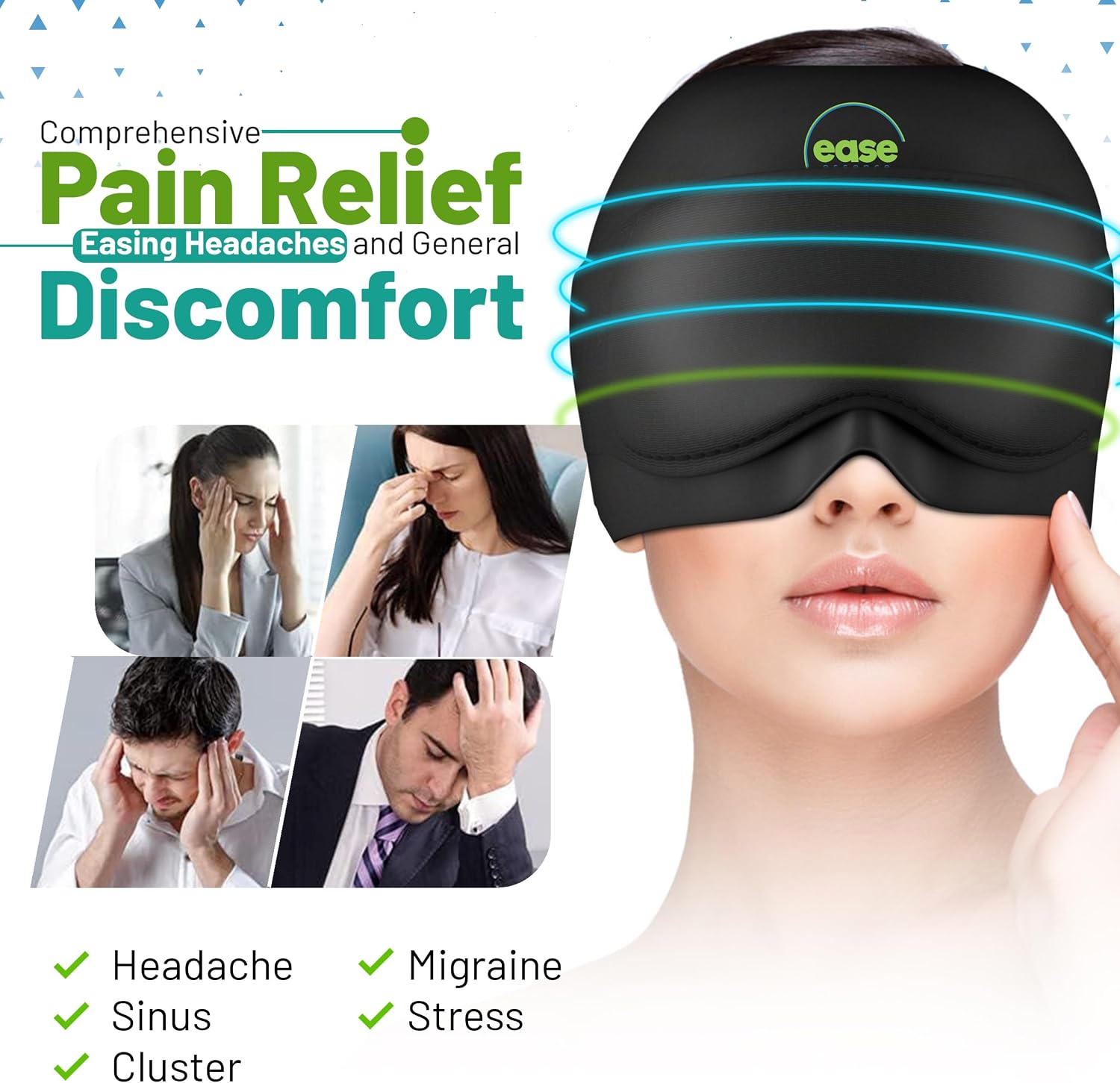
A wrap-around cold cap offers a practical advantage here: it delivers even, hands-free cold contact across the forehead, temples, and the brow — the very areas where both sinus headache and migraine pain tend to concentrate. Pairing it with a light-blocking eye mask adds an extra layer of comfort for the light sensitivity that so often accompanies migraine. Explore the Ease Essence Migraine Relief Cap if you want a purpose-built option for on-demand cold and warmth.

Drug-free pressure relief for your forehead & brow
The Ease Essence cap wraps 360° cold or heat around the forehead, temples, and back of the head — with a detachable eye mask for light sensitivity. Hands-free comfort while you rest.
Frequently asked questions
How do I know if my headache is a sinus headache or a migraine?
The most telling differences are the accompanying symptoms. True sinus headaches almost always come with signs of an active sinus infection: fever, thick or discolored nasal discharge, and a recent cold or upper respiratory illness. Migraines typically involve throbbing or pulsing pain (often one-sided), nausea, and sensitivity to light or sound. Both can cause facial and forehead pressure, which is why they are so easy to confuse. Only a doctor can perform a proper evaluation to distinguish them reliably.
Can a sinus headache turn into a migraine?
Sinus congestion and pressure can act as a migraine trigger in people who are prone to them. So while the two conditions are distinct, a sinus infection or allergy-related congestion may set off a migraine attack. This is another reason to see a clinician for recurring or severe headaches — the root cause matters for proper treatment.
Can cold therapy help a sinus headache or migraine?
Cold applied to the forehead and brow area can provide temporary comfort for the facial pressure associated with both conditions by calming inflamed tissue and numbing the area. It is a drug-free comfort measure, not a treatment or cure. For an accurate diagnosis and appropriate care, consult a healthcare professional.
Medical disclaimer: This article is for general education only and is not medical advice. Ease Essence is a drug-free wellness product, not a medical device, and is not intended to diagnose, treat, cure or prevent any disease. The symptoms of sinus headache and migraine can overlap with those of more serious conditions. If your headaches are frequent, severe, sudden-onset, or accompanied by neurological symptoms, please consult a qualified healthcare professional promptly. Only a clinician can accurately diagnose the cause of your headaches.