10 drug-free migraine remedies that actually help
⚡ Key takeaways
- Cold therapy at onset is one of the most widely used and fastest-acting drug-free migraine tools — apply it at the first sign, not an hour in.
- Darkness + quiet + light-blocking directly counters photophobia and phonophobia, two of the most disabling features of an attack.
- Dehydration is a common trigger and is also among the easiest to address — consistent hydration may reduce both frequency and severity.
- Trigger tracking is the highest-leverage preventive strategy available without a prescription — patterns take weeks to emerge, so start now.
- Magnesium, sleep, and stress reduction are the three lifestyle pillars most consistently mentioned in the migraine-management literature — and they compound each other.
Living with migraines means navigating a condition that can arrive without warning, disrupt an entire day, and resist a quick fix. Medication has its place, but many people want a toolkit of drug-free migraine remedies they can reach for at any stage — at the first sign, mid-attack, or as prevention. Here are ten approaches that are genuinely supported by patient experience, clinical reasoning, or both.
This is not medical advice, and it is not a replacement for working with a doctor if your migraines are frequent or severe. These are educational tools that many people find useful in combination with whatever care plan they and their healthcare provider develop together.
1. Cold therapy — apply it the moment an attack starts
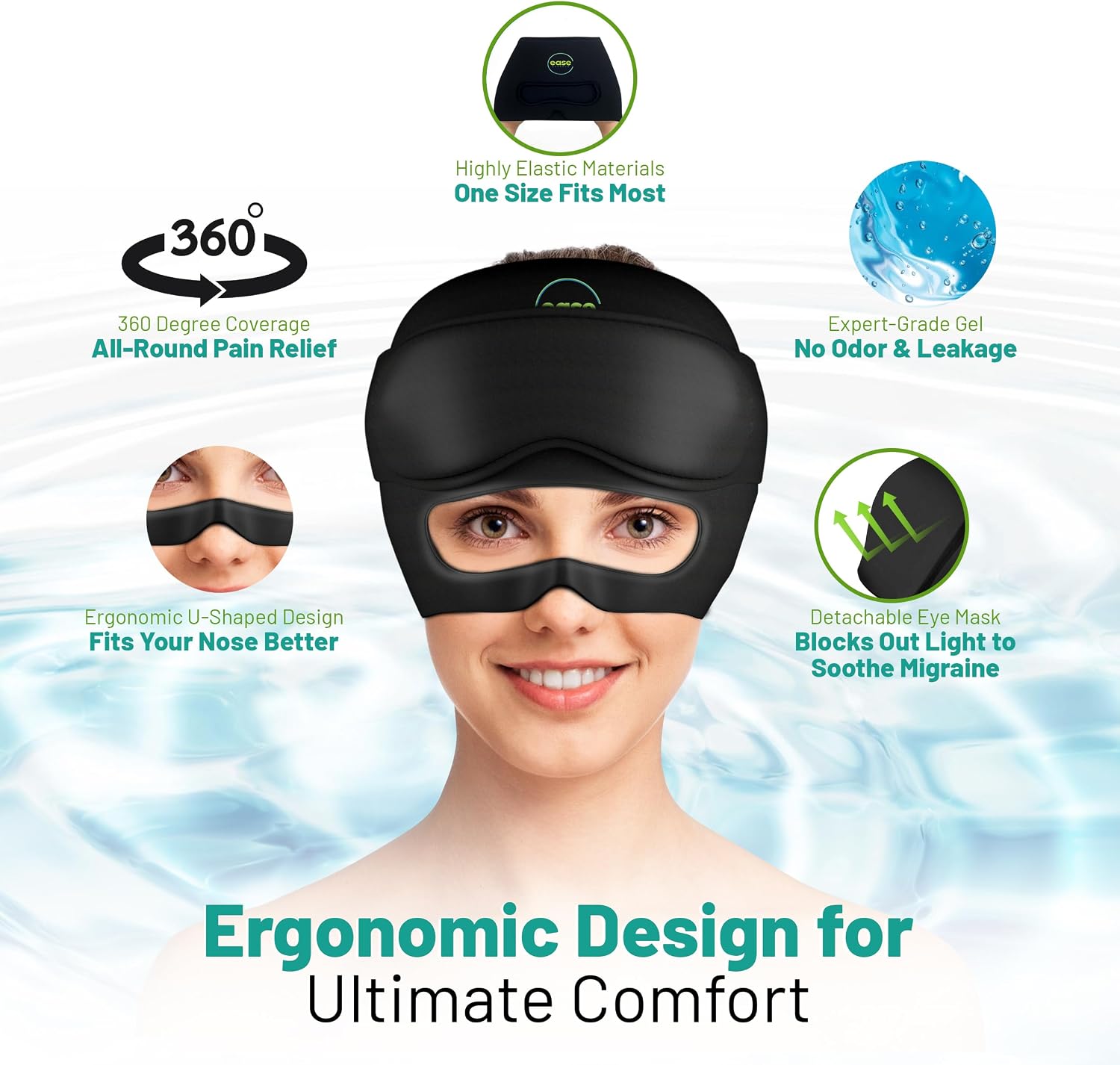
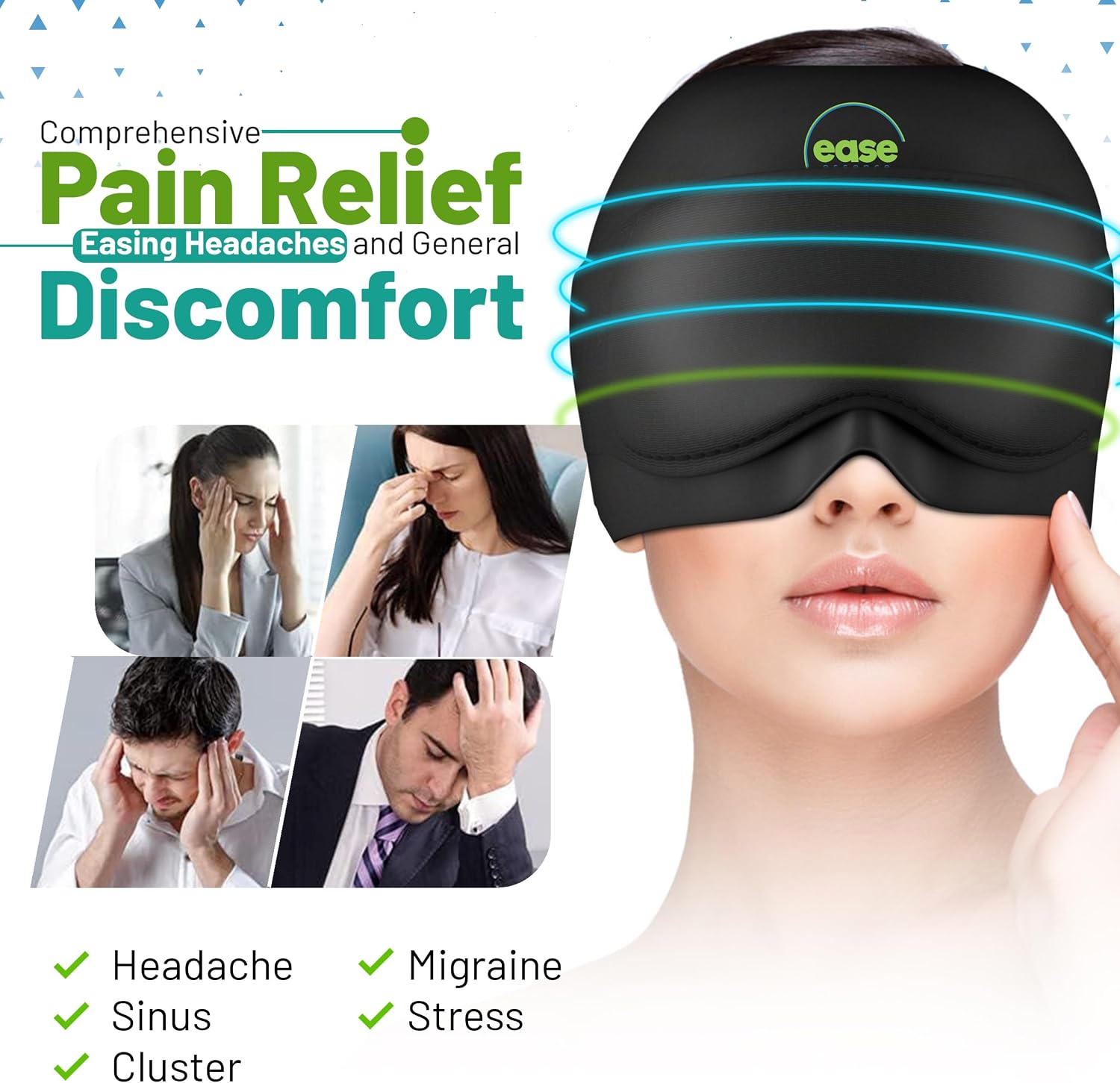
Cold is one of the most-used and best-supported drug-free migraine interventions. When a migraine begins, blood vessels around the head dilate and become inflamed. Cold causes those vessels to constrict (vasoconstriction), slows the conduction of nearby pain signals, and provides a numbing, competing sensation that can dull the intensity of the throb. The key is timing: applying cold at the very first hint of an attack — an aura, a warming temple, an early dull ache — works considerably better than waiting until the pain has peaked. A 360° cold cap that wraps around the forehead, temples, and back of the head delivers more complete coverage than a flat ice pack pressed to one spot. Learn more in our dedicated guide: Why cold therapy stops a migraine in its tracks.
2. A dark, quiet room — and a light-blocking eye mask
Photophobia (light sensitivity) and phonophobia (sound sensitivity) affect the majority of people during a migraine attack, and both can dramatically amplify pain. Retreating to the darkest, quietest space available is not "doing nothing" — it is actively removing two of the most powerful amplifiers of migraine pain. Blackout curtains, a sleep mask, or a gel eye mask that also blocks light all serve the same purpose. If you can combine light-blocking with cold therapy at the eyes and temples, you are addressing multiple attack features simultaneously.
3. Hydration and electrolytes
Dehydration is one of the most commonly reported migraine triggers, and it is also one of the most controllable. The relationship runs in both directions: dehydration can trigger an attack, and the nausea of a migraine often makes it harder to drink enough during one. At the first sign of a headache, drinking a meaningful amount of water — ideally with a pinch of salt or a low-sugar electrolyte supplement to aid absorption — is a low-effort, zero-downside first step. Aiming for consistent daily hydration (rather than catching up reactively) is an even better strategy. Avoid alcohol and limit caffeine on high-risk days, as both can affect fluid balance.
4. Caffeine — used carefully and sparingly
Caffeine's relationship with migraines is genuinely complicated. In moderate amounts, caffeine can narrow blood vessels and enhance the effect of certain pain responses, which is why it appears in some over-the-counter headache products. A small cup of coffee at the start of an attack may take the edge off for some people. However, caffeine is also a well-documented trigger for others, and daily caffeine use can cause rebound headaches when it's skipped. If caffeine helps you, use it intentionally and sparingly. If your migraines tend to arrive on mornings after missing your usual coffee, consider a slow taper rather than sudden cuts. When in doubt, ask your doctor.
5. Gentle compression and pressure at the temples
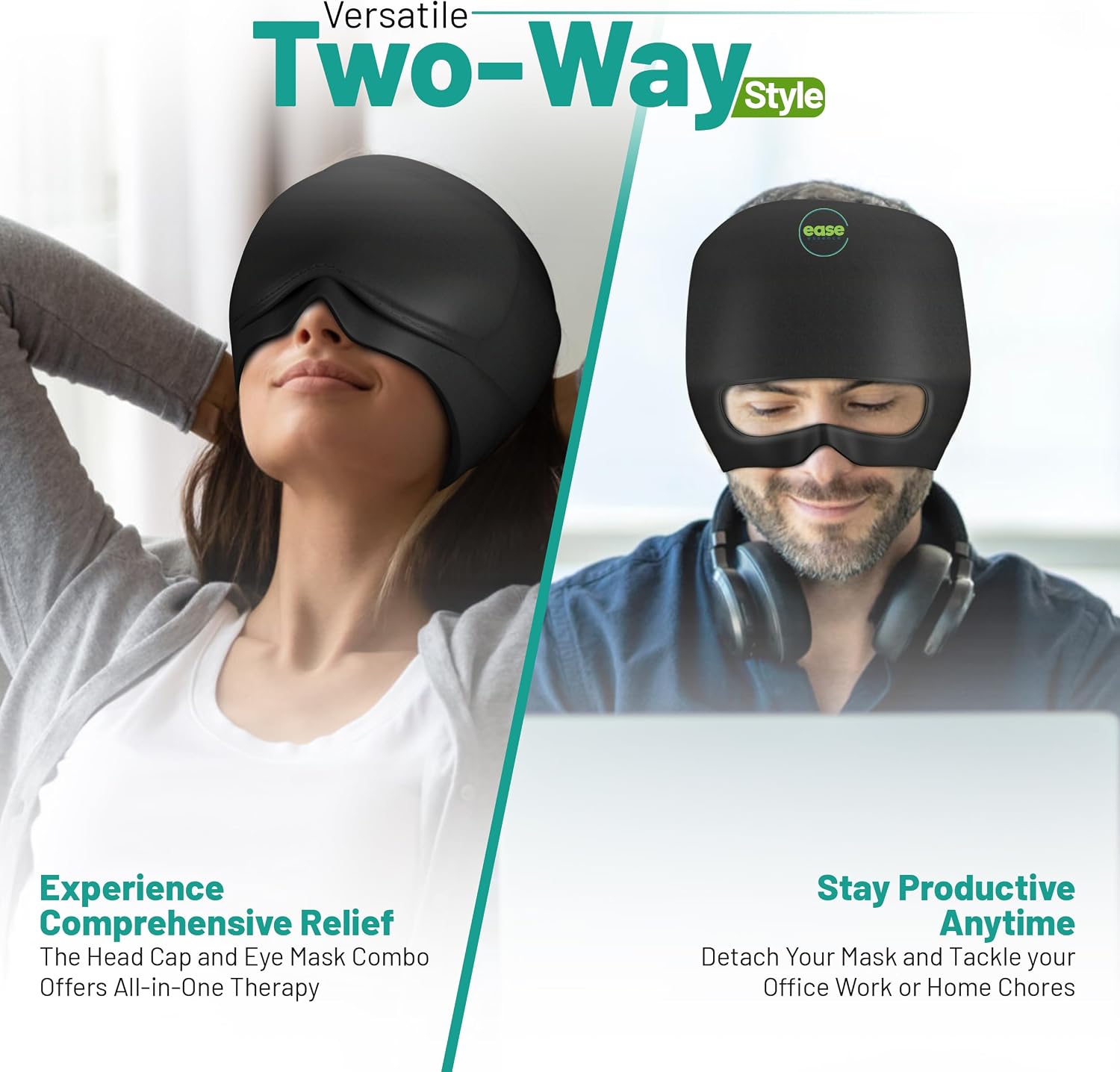
Many people instinctively press their fingers to their temples during a migraine. There is a physiological basis for this: gentle, sustained pressure can interrupt pain signaling at the surface level and provide some relief. A snug, stretchy headache cap — one that applies light, even compression around the forehead and temples — replicates this effect hands-free, allowing you to lie still and rest rather than holding pressure manually. The Ease Essence Migraine Relief Cap is designed specifically for this: the stretchy 360° fit applies consistent, gentle compression while also delivering cold or heat, meaning you get remedies 1, 2, and 5 from this list in a single wearable tool.
6. Sleep and a consistent sleep schedule
Sleep disruption is one of the most reliably documented migraine triggers — both too little sleep and too much can precipitate an attack for susceptible individuals. During a migraine, sleep often brings genuine relief; many people find that sleeping through the worst of an attack shortens its duration. The preventive angle is equally important: going to bed and waking at consistent times, keeping the bedroom cool and dark, and avoiding screens for an hour before bed all support the kind of regular sleep architecture that may reduce attack frequency over time. If you notice a pattern of migraines on certain days of the week, consider whether your sleep schedule shifts on those nights beforehand.
7. Magnesium — food first, supplements with guidance
Magnesium is one of the most-studied micronutrients in migraine research. Several studies have found that people who experience frequent migraines tend to have lower magnesium levels than those who do not, and some clinical trials of magnesium supplementation have shown reductions in attack frequency. Major headache organizations have listed magnesium as a potential preventive option worth discussing with a doctor. Food sources of magnesium include dark leafy greens (spinach, Swiss chard), pumpkin seeds, almonds, black beans, and dark chocolate. If you are considering a magnesium supplement, ask your doctor first — the appropriate form and dose vary, and high doses can cause digestive side effects.
8. Breathing, relaxation, and stress management
Stress is among the most frequently cited migraine triggers, and the relationship is bidirectional: stress can trigger attacks, and the anticipation of attacks creates its own layer of anxiety and stress. Slow, diaphragmatic breathing — inhaling for four counts, holding for four, exhaling for six — activates the parasympathetic nervous system and can interrupt the physiological stress cascade. Progressive muscle relaxation, gentle yoga, and mindfulness meditation have all been studied as migraine-management tools with modest but real evidence behind them. Even ten minutes of deliberate stillness in a quiet space can help during the early phase of an attack. Building a consistent relaxation practice — not just reaching for it mid-attack — tends to yield better results over time.
9. Trigger tracking — your most powerful preventive tool
Every migraine sufferer's trigger profile is different. Common culprits include certain foods (aged cheeses, processed meats, alcohol, artificial sweeteners, MSG), skipped meals, dehydration, bright or flickering lights, prolonged screen time, strong scents, weather or barometric pressure changes, hormonal shifts, and disrupted sleep. The problem is that triggers often work cumulatively — no single factor tips you over the threshold on its own, but two or three together do. A simple migraine diary — noting what you ate and drank, how you slept, your stress level, screen time, and weather in the 24 hours before an attack — reveals patterns over weeks that are invisible day-to-day. There are also dedicated apps designed for this. Identifying your top two or three personal triggers and addressing them is one of the highest-impact things you can do without a prescription.
10. Heat for neck and shoulder tension
While cold is typically the go-to during an acute migraine attack, heat has a different but valuable role — especially when tension in the neck, shoulders, and upper back is part of the picture. Muscle tension in those areas can contribute to tension-type headaches and may compound migraine pain for some people. A warm compress or heat pack applied to the back of the neck and shoulders can relax those muscles, improve circulation, and reduce the referred tension that aggravates head pain. Some people find that alternating cold at the head with heat at the neck — addressing both the acute vascular pain and the muscular tension simultaneously — gives the best combined result.
How the Ease Essence cap covers three of these at once
Remedies 1 (cold therapy), 2 (darkness and light-blocking), and 5 (gentle compression) are three of the most immediately actionable approaches during an active attack — and they all require you to keep something on your head while lying still. The Ease Essence Migraine Relief Cap is designed to deliver all three simultaneously: a stretchy 360° headache hat that stores in the freezer for cold therapy and applies even compression around the forehead and temples, plus a detachable gel eye mask that blocks light and adds cold or heat at the eye area. It also works with warm water for heat therapy (remedy 10, applied to the temples and forehead rather than the neck). One wearable, hands-free tool that lets you actually rest rather than holding a bag of ice to your head.
When to see a doctor
Drug-free remedies are useful tools, but they are not a substitute for medical evaluation in certain situations. Seek prompt medical attention if:
- You experience a sudden, severe headache that feels different from any headache you have had before — especially one described as "the worst headache of my life."
- Your headaches are accompanied by fever, stiff neck, confusion, vision changes, weakness, or difficulty speaking.
- You are having migraines more than a few times per month, or they are lasting more than 72 hours.
- Your headaches wake you from sleep, or they have changed significantly in character, frequency, or severity.
- Over-the-counter or drug-free approaches are no longer giving you adequate relief.
Frequent migraines are a medical condition with well-established prescription preventive and acute treatment options. A headache specialist or neurologist can help you build a comprehensive management plan that may include both drug-free strategies and medication, used together intelligently.

Cold + dark + compression — in one wearable cap
The Ease Essence cap covers three of the top drug-free remedies at once: 360° cold therapy, light-blocking eye mask, and gentle compression — hands-free, so you can actually rest.
Frequently asked questions
What is the most effective drug-free migraine remedy?
No single remedy works for everyone, because migraines vary significantly between individuals. That said, cold therapy applied at the very first sign of an attack — combined with resting in a dark, quiet room — is widely reported to help and is supported by patient experience data and at least one clinical study. Staying consistently hydrated and identifying personal triggers are also considered among the highest-impact strategies available without a prescription.
Can you relieve a migraine without medication?
Many people find meaningful relief through non-drug approaches such as cold or heat therapy, a dark quiet room, hydration, gentle pressure, and rest. These methods won't work for everyone, and severe or frequent migraines often warrant a conversation with a doctor about additional options. Drug-free approaches are best thought of as complementary tools, not replacements for professional medical care when it's needed.
How does tracking triggers help with migraines?
Migraine triggers — such as certain foods, dehydration, disrupted sleep, bright screens, weather changes, or hormonal shifts — vary by individual. Keeping a simple diary of what you ate, drank, how you slept, and your stress level in the 24 hours before an attack helps you identify patterns over time. Removing or reducing your personal triggers is one of the most evidence-supported preventive strategies available.
Medical disclaimer: This article is for general education only and is not medical advice. Ease Essence is a drug-free wellness product, not a medical device, and is not intended to diagnose, treat, cure or prevent any disease. If your headaches are frequent, severe, sudden or unusual, please consult a qualified healthcare professional.