Migraine relief during pregnancy: drug-free options

⚡ Key takeaways
- Always check with your OB, GP or midwife first before trying any remedy, comfort measure, supplement or medication during pregnancy. This article is general information only, not medical advice.
- Many pregnant people seek non-medication options because some migraine medications that are used outside of pregnancy are not recommended during it — your provider is the right person to guide you on what is safe for your situation.
- Drug-free comfort measures — such as cold therapy, rest in a dark quiet room, hydration, and small regular meals — are commonly discussed options, but are not substitutes for medical guidance.
- Cold therapy (a cool compress or cold cap on the forehead and neck) is one of the most frequently mentioned non-medication approaches, appreciated because it involves no drugs at all.
- Know the warning signs. A sudden severe headache, vision changes, facial or hand swelling, or high blood pressure during pregnancy warrants prompt medical attention — do not wait.
Dealing with a migraine is hard at the best of times. During pregnancy, it can feel even more isolating — especially when you're uncertain which remedies are appropriate and want to be as cautious as possible. This guide is here to gently walk through some of the drug-free comfort measures that many pregnant people explore, and to be clear about where medical guidance is non-negotiable.
Please read this entire article with the understanding that it is general, educational information only. It is not a substitute for advice from your OB, GP or midwife, who knows your health history, your pregnancy, and what is appropriate for you personally.
Why migraines can change during pregnancy
Headaches and migraines are among the more common experiences during pregnancy, particularly in the first trimester. The exact reasons are not fully understood, but fluctuating hormones — especially the significant shifts in estrogen that occur early in pregnancy — are thought to play a role for many people who are prone to migraines. Some people find their migraines actually improve in the second and third trimesters as hormone levels stabilize; others continue to experience them throughout.
Pregnancy also brings other potential headache triggers that are worth keeping in mind: changes in sleep patterns, dehydration, blood sugar swings, increased stress, and changes in posture or muscle tension as the body changes. Identifying your personal triggers — with your provider's guidance — can be a helpful part of your overall approach.
Because every pregnancy is different, and because headaches during pregnancy can sometimes indicate conditions that need medical evaluation, it is important to keep your healthcare provider informed about any headaches you experience — their frequency, severity, and any accompanying symptoms.
Why people seek drug-free options during pregnancy
Outside of pregnancy, some people manage migraines with prescription or over-the-counter medications. During pregnancy, the picture is more complicated. Many commonly used migraine medications — including certain triptans, anti-nausea drugs, and even some over-the-counter pain relievers — may not be recommended during pregnancy, particularly in certain trimesters. Your provider decides what, if anything, is safe for you.
This is one reason many pregnant people find themselves looking for non-medication comfort measures: not because those measures are guaranteed to work, but because they want to minimize any potential exposure to medication while still finding some relief. Drug-free comfort measures, used thoughtfully and with provider awareness, can be a meaningful part of managing an attack.
None of the options discussed below are cures, treatments, or medical interventions. They are comfort measures — ways of making a difficult experience a little more bearable while you rest and recover. Please discuss any of them with your provider before trying them.
Drug-free comfort measures worth discussing with your provider
The following measures are commonly discussed as non-medication options. They do not treat migraines or any medical condition, and how well they work varies from person to person. Always confirm with your healthcare provider that any of these are suitable for you.
Cold therapy — a cool compress or cold cap
Applying something cold to the forehead, temples and the back of the neck is one of the most widely used drug-free comfort measures for migraine. The cooling sensation can feel soothing, and some people find it helps take the edge off the pulsing or throbbing sensation.
A wrapped cold pack, a chilled cloth, or a wearable cold cap can all serve this purpose. The appeal during pregnancy is straightforward: there is no medication involved. Many pregnant people who use a cold cap appreciate that it is completely drug-free and that they can lie down with it in place, keeping their hands free to rest.
As with everything during pregnancy, confirm with your provider that cold therapy is appropriate for you before trying it. Keep any cold pack or gel pack wrapped in a layer of fabric — never apply ice or frozen gel directly to bare skin — and limit sessions to around 15–20 minutes at a time.
Rest in a dark, quiet room
Migraine attacks are commonly made worse by light and sound. Retreating to a dark, quiet room and allowing yourself to simply rest is one of the most accessible comfort measures available. During pregnancy especially, rest is rarely wasted. An eye mask or a darkening wrap over the eyes can help block out light, which many people find provides additional relief.
Hydration and small, regular meals
Dehydration and low blood sugar are well-known migraine triggers, and pregnancy makes both more likely — the body's fluid and energy needs increase significantly. Sipping water consistently throughout the day and eating small, regular meals or snacks to keep blood sugar stable is a gentle, drug-free measure that may help reduce the frequency of attacks for some people. It is also simply good practice during pregnancy in general.
If you are experiencing morning sickness and finding it difficult to stay hydrated or eat regularly, discuss this with your provider — they may have additional suggestions.
Gentle neck and shoulder warmth
Some people find that tension in the neck and shoulders contributes to their headaches, and a warm compress or heat pack on the neck and upper shoulders (not on the abdomen during pregnancy) can provide some comfort. If you tend to prefer warmth to cold, this may be worth exploring — again, with your provider's awareness.
Consistent sleep
Sleep disruption is a recognized trigger for many people who experience migraines. During pregnancy, sleep is often harder to maintain as the body changes, but prioritizing a consistent sleep schedule — going to bed and waking at similar times — and creating a comfortable, dark, cool sleep environment may help reduce the frequency of attacks over time.
Gentle movement and fresh air
For some people, gentle movement such as a short walk in fresh air can help during the earlier, milder phase of a headache, before it fully develops. During an active migraine attack, most people find that lying still is preferable. Listen to your body, and always exercise within the guidelines your provider has given you for physical activity during pregnancy.
Breathing and relaxation techniques
Stress is a commonly cited migraine trigger. Slow, diaphragmatic breathing, progressive muscle relaxation, or guided relaxation exercises may help reduce tension and stress that contribute to headache onset. These are safe, drug-free practices that can be incorporated into daily life during pregnancy and are worth exploring with your provider or a qualified practitioner.

A drug-free comfort option — no medication involved
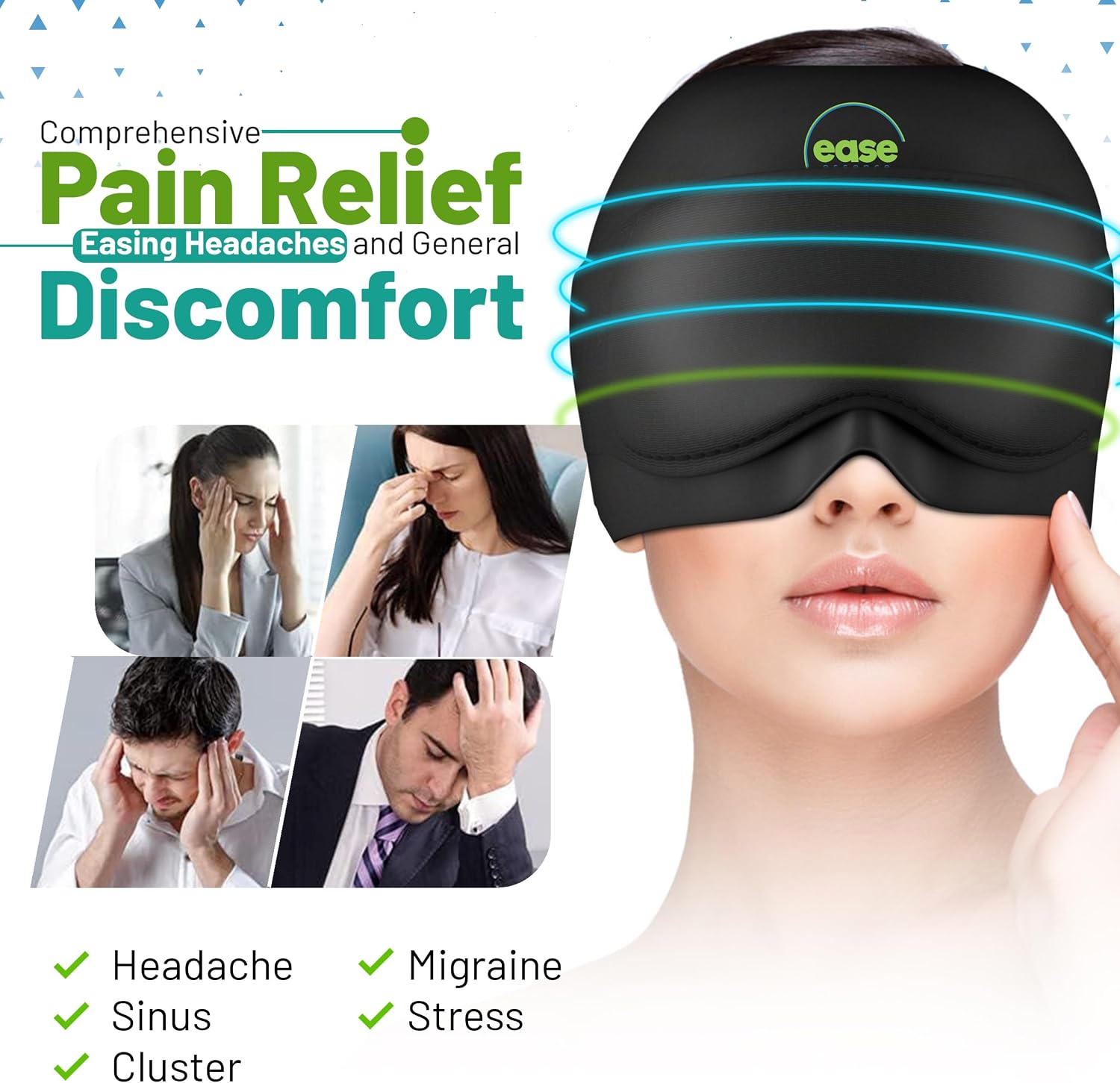
The Ease Essence cap is a completely drug-free comfort item: 360° cold (or heat) wrap around the forehead, temples and back of the head, with a detachable eye mask for darkness. Many people appreciate it precisely because it involves no medication at all. Always check with your provider before use during pregnancy.
Combining comfort measures
In practice, many people find that combining several of these measures provides more comfort than any single one alone. Cold on the forehead and eyes, a dark and quiet room, and sipping water while resting quietly is a common combination. The goal is simply to make the experience of the attack as manageable as possible while it passes.
If you find that migraines are frequent, severe, or significantly affecting your quality of life during pregnancy, please bring this up with your provider. They may be able to offer additional guidance or refer you to a specialist. You should not feel you simply have to endure frequent severe headaches without support.
Important warning signs — seek care promptly
Not all headaches during pregnancy are migraines, and some require urgent medical attention. Please contact your healthcare provider promptly or seek emergency care if you experience any of the following:
- A sudden, severe headache — sometimes described as the worst headache of your life or a "thunderclap" headache
- Headache accompanied by vision changes, including blurred vision, flashing lights, or seeing spots
- Swelling of the face, hands or feet, particularly if it comes on suddenly
- Pain or tenderness in the upper right part of your abdomen
- High blood pressure readings
- Headache accompanied by fever, stiff neck, or confusion
These can be signs of conditions — including preeclampsia — that require prompt medical evaluation. Please do not try to manage these symptoms with comfort measures at home. When in doubt, call your provider or go to the emergency department. They would always rather hear from you.
For a broader look at non-medication approaches to headache comfort, see our guide to drug-free migraine remedies. And for an overview of what the Ease Essence Migraine Relief Cap does, visit our homepage.
Frequently asked questions
Is cold therapy safe during pregnancy?
Cold compresses applied to the forehead, temples and neck are a widely used drug-free comfort measure. However, every pregnancy is different, and it is important to confirm with your OB, GP or midwife before trying cold therapy — or any new remedy — to make sure it is appropriate for your individual situation. If you do use a cold pack or gel cap, always keep a layer of fabric between the cold and your skin and remove it if it becomes uncomfortable.
What migraine options are drug-free during pregnancy?
Commonly discussed drug-free comfort measures include: applying cold (or cool) compresses to the head and neck, resting in a dark and quiet room, staying well hydrated, eating small regular meals to keep blood sugar stable, gentle neck warmth if cold is not preferred, consistent sleep, gentle movement or fresh air (in the early phase), and breathing or relaxation techniques. None of these are treatments or cures, and you should discuss which are appropriate for you with your healthcare provider before trying them.
When should I call my doctor about a headache during pregnancy?
Contact your healthcare provider promptly — or seek emergency care — if you experience a sudden severe headache, headache with vision changes (blurred vision, flashing lights, spots), sudden swelling of the face or hands, upper right abdominal pain, elevated blood pressure readings, fever, stiff neck, or confusion. These can be signs of conditions such as preeclampsia that require immediate medical attention. Do not try to manage these symptoms at home. When in doubt, call your provider — they would always rather hear from you.
Medical disclaimer: This article is for general educational purposes only and is not medical advice. It does not replace consultation with a qualified healthcare provider. Ease Essence is a drug-free wellness comfort product, not a medical device, and is not intended to diagnose, treat, cure or prevent any disease or medical condition. Pregnant individuals should always consult their OB, GP or midwife before starting any new remedy, comfort measure, supplement or medication. If you are experiencing severe, sudden or unusual headaches during pregnancy, or any of the warning signs described above, seek medical care promptly.