Cooling eye mask for migraines & puffy eyes: how to choose one that actually helps
⚡ Key takeaways
- Cold over the eyes and temples eases migraine throbbing, photophobia and puffy eyes — but only if the mask stays cold long enough and covers the temples, not just the eyelids.
- For migraines, light-blocking matters as much as cooling. Full darkness reduces photophobia more than dim light; the best migraine mask gives you both at once.
- Look for ~20–30 min cold retention, temple coverage, a comfortable fit, and odorless gel — these four factors separate effective masks from ones that disappoint.
- A detachable eye mask paired with a 360° cap gives total-darkness relief plus whole-head cold in one — better than a standalone gel mask for migraine attacks.
- Cold is for throbbing and puffy; gentle heat works better for tension-type headaches. Use the right one for your headache pattern.
If your migraine pain centres around your eyes — or if you wake up with puffiness and that familiar ache behind the brows — a cooling eye mask can be a simple, drug-free first step toward relief. But not all gel masks are built the same. Some barely cover the eyelids. Others warm up in eight minutes. A few smell like industrial rubber when heated. This guide walks through everything you need to know to choose one that actually helps, whether your goal is migraine relief, photophobia management, or de-puffing tired eyes.
Why cold helps migraines, puffy eyes and photophobia
Cold works through a handful of overlapping mechanisms. When chilled gel sits over and around the eyes, it causes the small blood vessels just under the skin to constrict — a process called vasoconstriction. During a migraine, blood vessels around the head become dilated and hypersensitive, contributing directly to that pulsing, throbbing quality. Narrowing those vessels can take the edge off the pounding sensation and reduce local inflammation at the same time.
Cold also slows the conduction speed of sensory nerves in the surrounding tissue. Pain signals travel less efficiently through cooled tissue, which is the same principle behind icing a sports injury. The result is a mild but real numbing effect that can make pain more bearable without any medication involved.
For puffy eyes — whether from a long night of screens, crying, or poor sleep — the mechanism is slightly different. Cold reduces the fluid accumulation (oedema) that causes visible swelling by temporarily tightening the tiny capillaries that allow fluid to leak into the tissue. This is why cold spoons, refrigerated cucumber slices and gel masks have been used for under-eye puffiness for generations. The effect is cosmetic and temporary, but it is real and rapid.
To understand the broader science of cold and migraine in more detail, see our full explainer on cold therapy for migraines.
Cooling vs. blackout — you want both
Here is something many people miss when shopping for a migraine eye mask: the cold is only half the job. During a migraine attack, up to 80% of sufferers experience photophobia — an intense sensitivity to light that can feel like looking directly into a spotlight even in a normally lit room. Light hitting the eyes triggers the trigeminal nerve pathway and can intensify the headache significantly.
A cooling gel mask that lets light leak in around the edges is providing cold without darkness. A sleep mask that blocks light but contains no gel provides darkness without cold. For migraines, you want both simultaneously. Full, complete darkness — not merely dimness — is what makes a meaningful difference to photophobia. This means the mask needs to sit flush against the face with no gaps at the nose bridge or the sides, and the fabric should be opaque rather than just darkened.
Many budget gel masks fail here. They are moulded in a single rigid shell that sits proud of the face, leaving a crescent of light visible at the bottom. The best masks for migraine use a flexible or adjustable design that conforms to the face shape and seals out light while still delivering cold contact to the skin.
What to look for in a cooling eye mask
With so many options on the market, it helps to have a clear set of criteria. Here are the five factors that matter most:
1. Cold retention (gel volume and material)
This is the most practically important factor. A mask that warms up in ten minutes is nearly useless for a migraine session. Look for masks with enough gel volume to stay cold for at least 20 to 30 minutes at room temperature. Thicker gel packs retain cold longer; very thin or watery gel sections lose temperature quickly. Avoid masks where the gel is split into small isolated pockets, which warm up faster than a continuous gel layer.
2. Temple coverage
Migraine pain is rarely confined to the area directly over the eyelids. It almost always extends to the temples — the soft area on either side of the head above the cheekbones. A mask that only covers the eye area provides cold where the pain is visible but misses the temple area where pain is often felt most acutely. Look for a mask with extended wings or panels that reach the temples on both sides.
3. Light-blocking fit
As discussed, complete darkness matters for photophobia. The mask should sit flush against the face. Adjustable elastic or a wraparound design helps it conform to different face shapes. A nose-bridge cutout or contoured nose piece that seals against the face prevents the most common leak point.
4. Odorless gel
Gel masks that smell strongly — especially when heated — can trigger nausea or make a migraine worse. This is more of an issue than it sounds. Some gel masks have a chemical odor that is tolerable at room temperature but becomes pronounced when warmed. If you plan to use the mask for both cold and heat therapy, odorless gel is not a nice-to-have; it is essential.
5. Comfortable, adjustable fit
When you have a migraine, the last thing you need is a mask that slips off your face when you turn over, or an elastic strap that digs into your head. Look for soft, breathable fabric on the side that contacts your skin, and an adjustable strap system that stays put when lying down without compressing painfully.
| Feature | Why it matters for migraines | What to check |
|---|---|---|
| Cold retention | Session needs to last 15–20+ min | Continuous gel layer; 20–30 min stated duration |
| Temple coverage | Temple pain is often the worst | Extended wing panels reaching past eye corners |
| Light-blocking | Photophobia amplifies migraine pain | Opaque fabric; flush nose-bridge seal; no gaps |
| Odorless gel | Chemical smells can worsen nausea | Check reviews for smell complaints, especially when heated |
| Adjustable fit | Masks that slip off are useless lying down | Hook-and-loop or adjustable elastic; soft skin-contact fabric |
Fixed mask vs. detachable mask vs. standalone gel mask
Once you understand what you need, the next question is what type of product to buy. There are three broad categories:
Standalone gel eye mask
This is the most common type — a single gel-filled mask worn over the eyes, usually stored in the fridge or freezer. It is inexpensive and works reasonably well for mild puffiness or mild eye-area pain. The limitations for migraine use are significant: it covers only the eye area, does nothing for forehead or temple pain, provides no whole-head coverage, and usually slips off when you lie down without an adjustable strap.
Fixed cap with built-in eye section
Some cold caps have an integrated eye panel that cannot be removed. These provide broader head coverage but the eye section cannot be chilled independently of the rest of the cap, and you cannot use just the eye section for de-puffing sessions unrelated to a migraine. They also tend to be bulkier and harder to put on during an active attack.
360° cap with a detachable gel eye mask
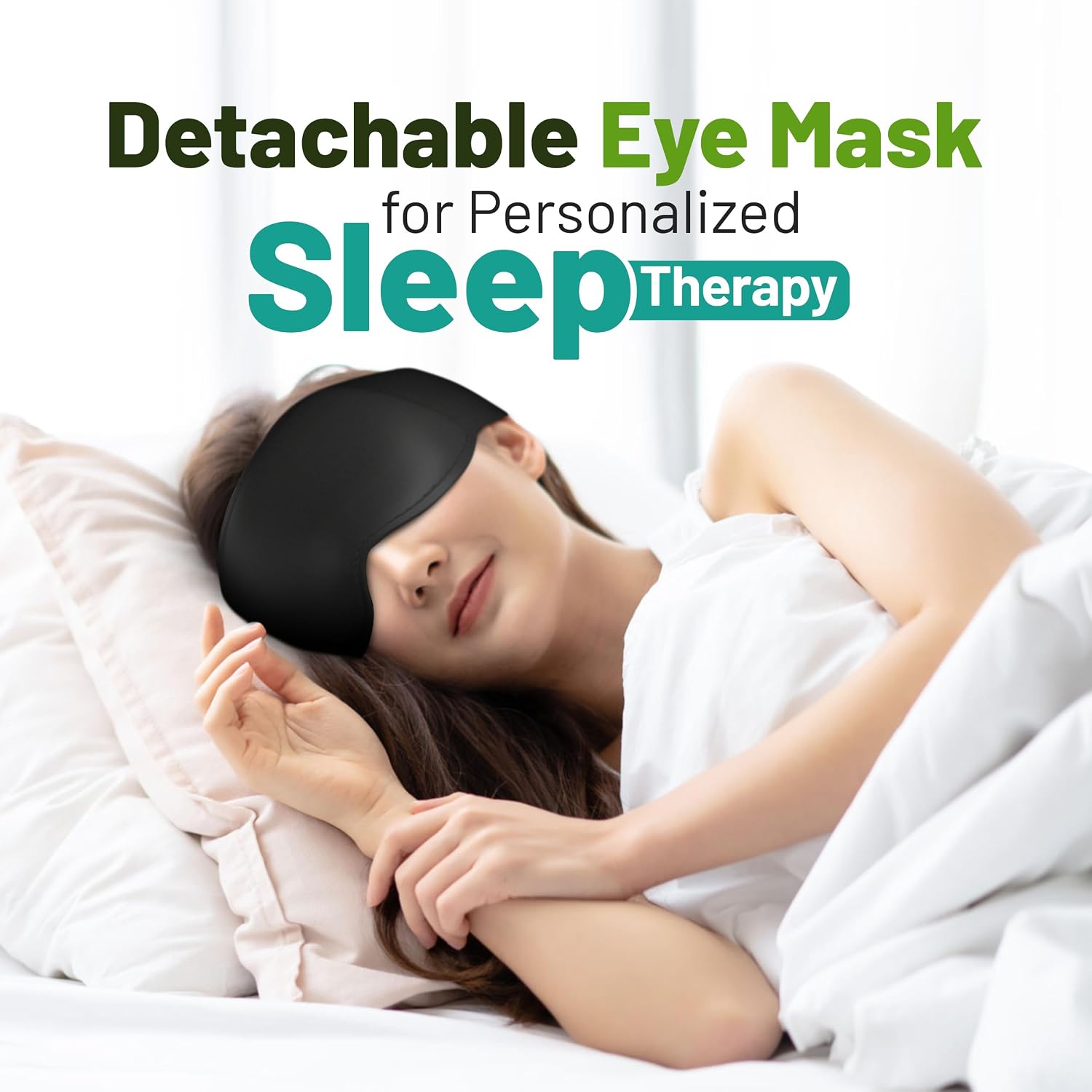
This is the most versatile design for migraine sufferers. The cap provides 360-degree coverage around the forehead, temples, and the back of the head — the full migraine pain zone. The detachable gel eye mask clips on or attaches when you want the additional eye-area cold and light-blocking, or detaches when you want to use just the cap. You can also chill the eye mask separately and use it on its own for morning de-puffing without putting on the full cap.
For a migraine attack, the detachable design wins: you get whole-head cold for the diffuse, everywhere-at-once migraine pain, plus concentrated cold and darkness directly over the eyes and temples from the attached gel mask. It is also easier to put on and adjust during a painful attack than a rigid single-piece design.
Cooling eye mask for puffy and tired eyes after screens or crying
Not every use case involves a migraine. A cold eye mask is also a practical tool for everyday eye fatigue — the swollen, heavy feeling after a long screen session, early-morning puffiness, or post-cry inflammation.
For these uses, cold retention requirements are lower (10–15 minutes is usually enough), and temple coverage matters less than it does during a migraine. The more important factors are comfort and reusability. Look for a mask that is easy to store (fits in a pouch in the freezer), easy to put on, and has a soft fabric side that does not irritate the under-eye skin.
Many people also find that warming the same mask — briefly microwaved or soaked in warm water — helps relax tired eyes after a long day. If you want this flexibility, the odorless gel requirement becomes even more important. For a dedicated guide to cold therapy for puffiness and morning eye recovery, see our article on cold therapy for puffy eyes.
How to use a cooling eye mask safely
Cold therapy is gentle and accessible, but a few simple guidelines keep it comfortable and effective:
- Always use a fabric barrier. Never place a frozen gel mask directly on bare skin. The outer fabric layer on most masks serves this purpose, but if you are using a thin gel insert, wrap it in a soft cloth first.
- Limit sessions to ~15–20 minutes. Longer sessions do not provide significantly more benefit and can become uncomfortable. If the cold starts to feel unpleasant before 15 minutes, remove the mask.
- Apply early. Cold works best at the onset of a migraine — during the early pain phase or even during the aura if you experience one — rather than after the headache has been building for an hour. Keep your mask in the freezer so it is ready at the first sign of an attack.
- Do not sleep with the mask on. Gel masks can shift during sleep and should always be used while you are awake and able to remove them if needed.
- Chill in the fridge for milder cold, freezer for full effect. Some people find freezer-cold too intense for the delicate under-eye area; a fridge-cold mask provides gentler relief that still lasts a reasonable session.
A quick note on cold vs. heat
Cold is the go-to for migraine and puffy eyes — but there are headache types where heat works better. If your headache feels like muscle tightness at the back of the head or neck rather than throbbing eye-area pain, it may be tension-type, and gentle warmth on the neck and shoulders can be more effective than cold over the eyes. A mask that supports both modes gives you more flexibility. For a full breakdown of which to use when, see our guide on cold vs. heat for headaches.
The Ease Essence approach: detachable, odorless, hot & cold
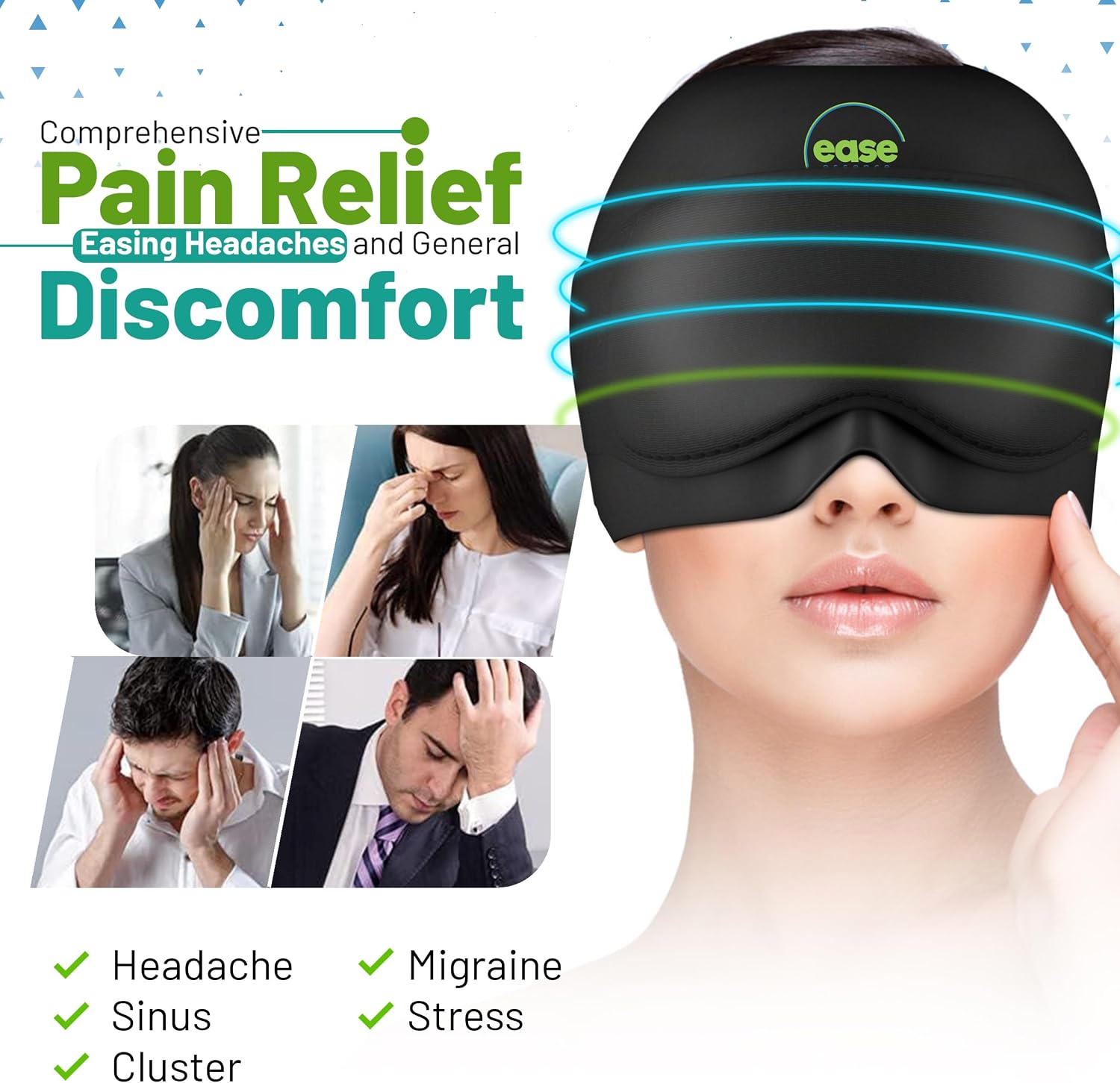
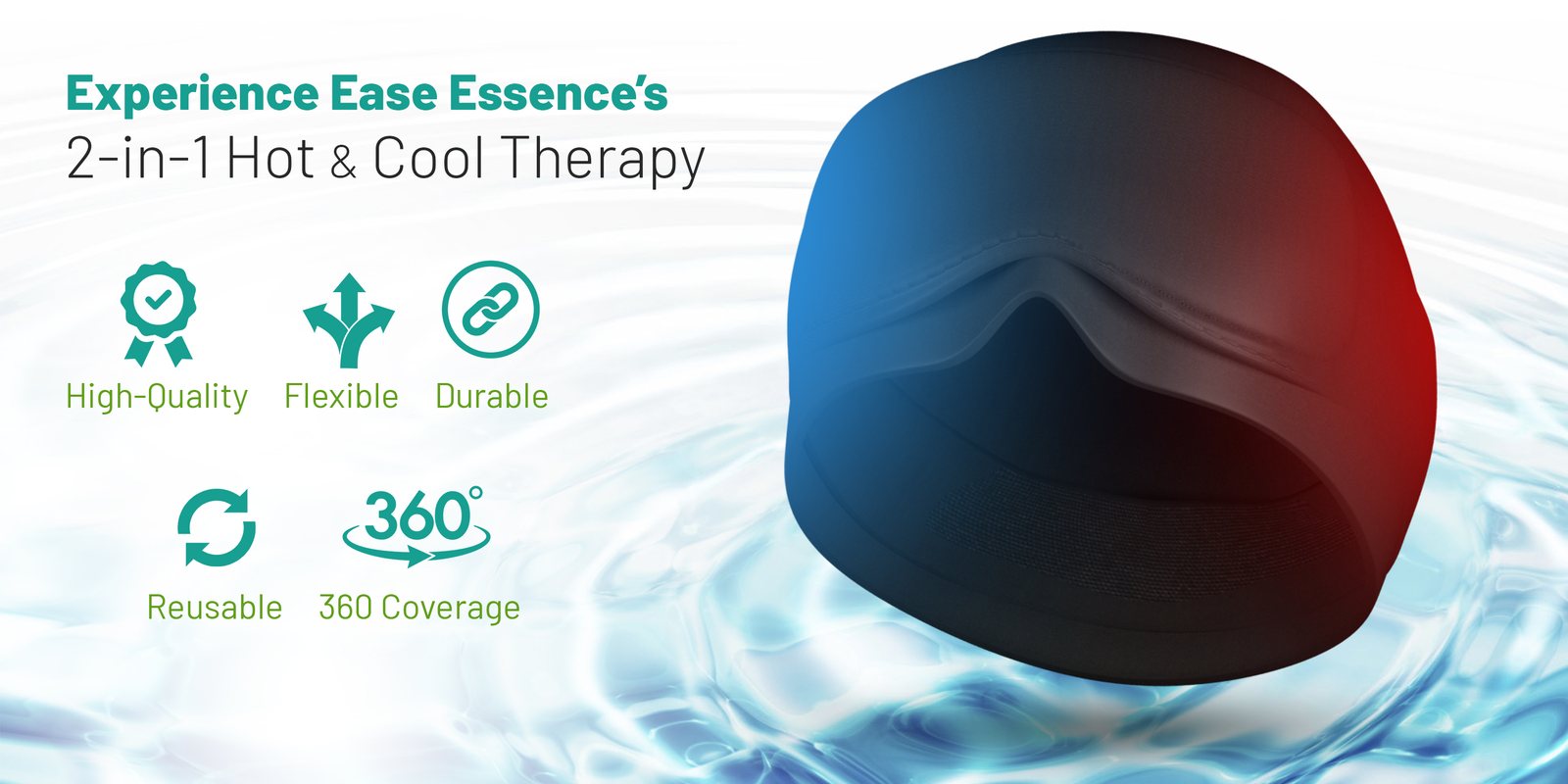
The Ease Essence Migraine Relief Cap is designed around the detachable cap-plus-mask system described above. The 360° stretchy headache hat wraps cold (or heat) around the full head — forehead, temples, crown, and back — while the detachable gel eye mask attaches for concentrated darkness and cold over the eyes and temples during an attack, then removes for standalone de-puffing sessions. The gel is odorless and supports both hot and cold use. It has a 4.3-star rating from 220 reviewers on Amazon, where it is listed as a 2-in-1 migraine relief cap. For a deeper look at the cap system, see our complete migraine relief cap guide.

Cold + darkness, exactly where migraines hurt most
The Ease Essence cap wraps cold around your whole head while the detachable gel eye mask delivers darkness and targeted cold over your eyes and temples — hands-free and odorless.
Frequently asked questions
Do cooling eye masks help migraines?
For many people, yes. Cold applied over and around the eyes can ease the throbbing and pressure of a migraine through vasoconstriction — narrowing the dilated blood vessels that contribute to pain — as well as a mild numbing effect. Crucially, the mask must also block light, because photophobia (light sensitivity) is present in the majority of migraine attacks and can intensify pain significantly. A mask that is both cold and fully light-blocking tends to provide more relief than one that only cools.
How long should I leave a cooling eye mask on?
Around 15 to 20 minutes per session is a comfortable and commonly recommended window. Always keep a layer of fabric between the gel and your bare skin. Remove the mask if it becomes uncomfortably cold, and wait a few minutes before reapplying. Do not sleep with a gel mask on.
Cold or heat for a headache behind the eyes?
For a throbbing, pulsing headache — the typical migraine pattern — cold is generally preferred because it constricts blood vessels and numbs the area. For a tension-type headache that feels like tightness or pressure rather than throbbing, gentle warmth can help relax the muscles. If you are unsure which type you have, cold is usually the safer starting point for eye-area pain.
Can a cooling eye mask reduce puffy eyes?
Yes. Cold causes local vasoconstriction and temporarily reduces fluid accumulation under the skin, which is why cold compresses have long been used for morning puffiness, post-cry swelling, and tired eyes after long screen sessions. A cooling eye mask applied for 10 to 15 minutes can noticeably reduce visible puffiness. The effect is temporary and cosmetic, not a treatment for any underlying condition.
What should I look for when buying a cooling eye mask?
The five most important factors are: (1) cold retention — look for 20 to 30 minutes of useful cooling; (2) temple coverage — for migraines the mask must reach the temples, not just the eyelids; (3) full light-blocking — complete darkness matters as much as cooling during a migraine attack; (4) odorless gel — some gel masks develop an unpleasant smell, especially when heated; (5) comfortable, adjustable fit so it stays in place when you lie down. A detachable eye mask that pairs with a 360-degree head wrap gives you cold over the eyes and temples plus whole-head coverage simultaneously.
Medical disclaimer: This article is for general education only and is not medical advice. Ease Essence is a drug-free wellness product, not a medical device, and is not intended to diagnose, treat, cure or prevent any disease. If your headaches are frequent, severe, sudden or unusual, please consult a qualified healthcare professional.